
Luxury Bridal Scrapbook
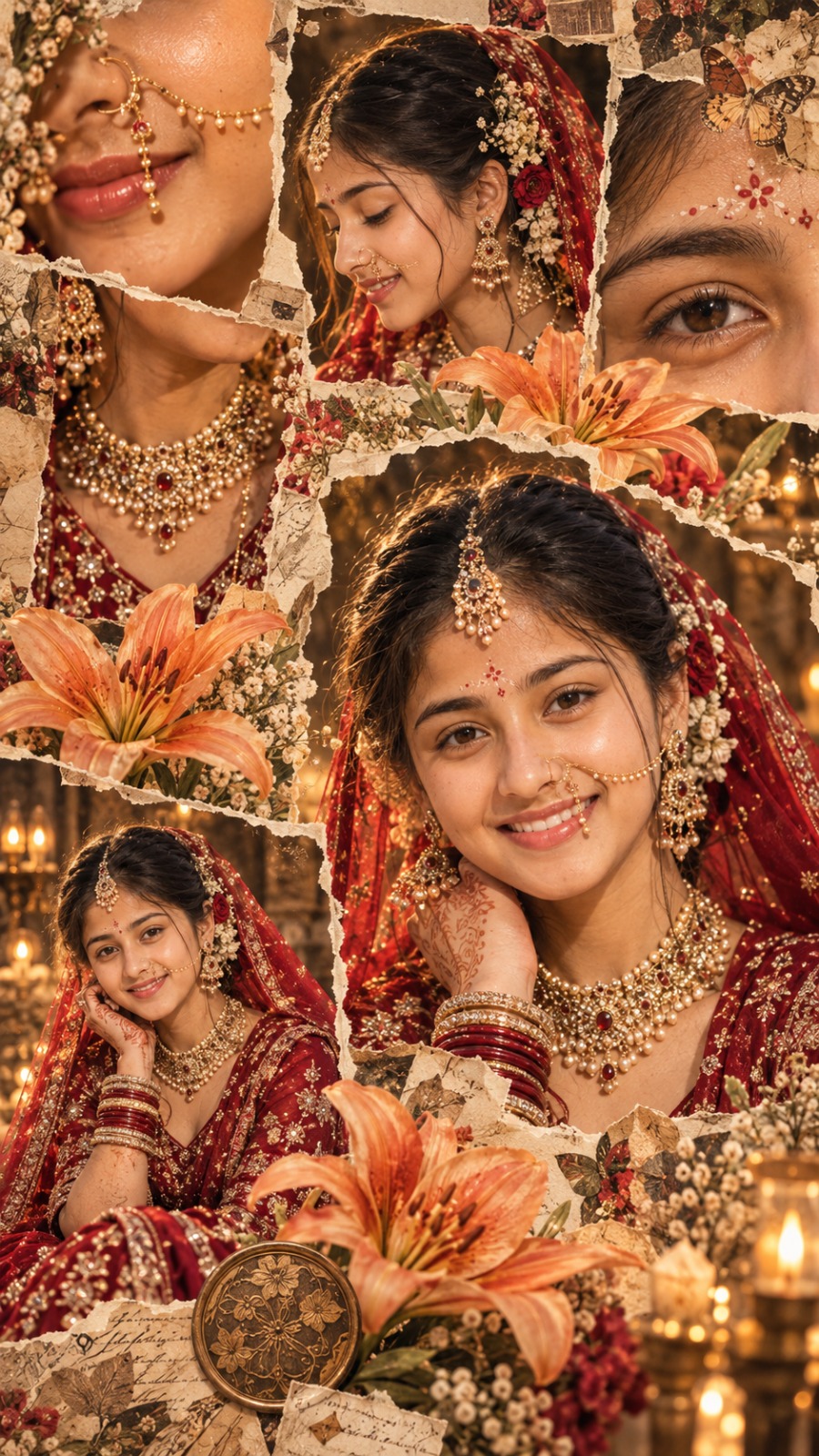
The concept centers on a Luxury Bridal Scrapbook designed as a vertical romantic editorial collage. Instead of showing one conventional bridal photograph, the composition brings together several photographic views of the same woman. Each panel focuses on a different part of the bridal appearance, creating the feeling of a carefully curated collection of wedding memories. The large main portrait establishes the bride’s identity, while the surrounding close-ups reveal details of her expression, jewelry, makeup, veil, profile, and overall styling.
The main subject is a woman presented as a bride. Identity continuity is essential throughout the concept because every photographic panel represents the same person. The facial structure, eye shape, eyebrows, nose, lips, jawline, cheeks, hair characteristics, natural asymmetry, and other distinctive facial features remain recognizable from one panel to another. The design therefore reads as one bride photographed from several perspectives rather than several unrelated women.
The dominant portrait appears toward the lower-right or central-lower region. It is the largest identity panel and provides the strongest emotional connection. The bride faces the camera with a warm, joyful smile. Her head angle, visible shoulders, veil, jewelry, and crop are treated as important parts of the composition. The large portrait gives the entire collage a clear visual anchor.
The upper-center profile panel provides a contrasting photographic viewpoint. The bride looks downward or sideways, creating a softer and more graceful mood. The profile allows the viewer to appreciate the shape of the veil, floral head decoration, jewelry, and traditional bridal styling from another angle. It also prevents the composition from becoming repetitive.
The upper-left section contains an extreme facial close-up focused around the lips and nose. The bridal nose ring and delicate chain crossing the face become important visual details. Because the crop remains intentionally tight, the panel feels like a selected photographic detail rather than a complete portrait.
The left-middle panel focuses on the neck and chest area, emphasizing the elaborate bridal necklace and surrounding jewelry. This close-up adds a luxury fashion-editorial quality because the jewelry itself becomes part of the photographic storytelling. Intricate gold details provide visual richness and reinforce the traditional bridal identity.
The upper-right panel features an extreme eye close-up. The eye, surrounding skin, and forehead decorations create another intimate detail. Decorative floral or ornamental elements add texture and help connect this close-up to the larger bridal styling.
The lower-left panel contains a smaller three-quarter or full bridal portrait. The woman is gracefully posed while wearing the same deep red outfit and veil. Its smaller scale makes it a supporting memory fragment rather than another dominant portrait. Together, these different panels create a visual sequence of bridal details.
The bridal clothing is a defining feature. Deep red or maroon traditional attire creates a rich foundation for the composition. The fabric is richly embroidered and visually substantial, giving the bride an elegant ceremonial appearance. The red veil frames the face and contributes additional texture around the head and shoulders.
The jewelry is equally important. Ornate gold earrings, maang tikka, elaborate necklace, nose ring with chain, forehead decorations, and floral hair accessories create a detailed traditional bridal look. Each accessory can become more visible in one of the smaller photographic panels, allowing the collage to showcase details that might be overlooked in a single portrait.
The flowers introduce a warm botanical layer. Large peach and orange lilies appear throughout the composition and overlap several photographic panels. Their placement creates a connection between separate portraits while their organic shapes soften the rectangular paper fragments.
The floral colors work naturally with the deep red clothing and antique gold jewelry. Peach and orange introduce warmth without becoming overly bright. Small flowers and foliage can also appear around the paper fragments, reinforcing the romantic botanical atmosphere.
The scrapbook structure is built from torn cream and beige paper edges, layered photographs, irregular overlaps, and small decorative fragments. The imperfect paper edges are important because they create a handmade quality. Instead of looking like a clean modern photo grid, the composition feels assembled from meaningful photographic pieces.
The central handwritten paper note is another recognizable part of the reference language. The phrase “Bloom Radiate Shine” belongs to the reference design and is treated as reference-only text. When a user supplies custom wording, that personalized wording can replace the reference note. This keeps the visual treatment consistent while allowing the content to become personal.
The text treatment is deliberately physical-looking. Names, dates, wedding dates, quotes, messages, venues, and locations can appear as handwritten or vintage editorial details printed on torn paper. The typography should feel like it belongs to the scrapbook rather than appearing as a modern digital overlay.
The round medallion or seal-like decorative object near the bottom adds an antique visual accent. Its circular shape contrasts with the rectangular photographic panels and irregular paper edges. It also helps create a more curated, keepsake-like composition.
Lighting is warm and cinematic. Amber illumination creates soft golden highlights across the bride’s skin, jewelry, flowers, veil, and paper surfaces. Deep brown shadows provide contrast without becoming harsh. The overall feeling is closer to candlelight or golden-hour warmth than bright studio illumination.
The color palette combines deep burgundy, red, antique gold, peach, orange, cream, beige, warm brown, and amber. These colors establish a cohesive romantic environment. Cool blue grading, neon colors, and excessive saturation would change the character of the design, so the palette remains intentionally warm and refined.
Creamy bokeh provides soft background depth. Some environmental details remain blurred, allowing the bride’s face and jewelry to remain the strongest visual points. Shallow depth of field helps the separate photographic panels feel like parts of a professional bridal editorial session.
The visual style combines realistic bridal photography with handmade scrapbook composition. Photographic realism keeps the bride recognizable, while paper textures, torn edges, flowers, handwritten details, and layered panels introduce an artistic editorial quality.
The composition is vertically organized and deliberately varied. The panels are not intended to be identical rectangles or equal-sized portraits. Each one preserves its own crop, camera angle, scale, and subject visibility. This variation makes the design feel like a real collection of selected photographs rather than a repetitive template.
The Luxury Bridal Scrapbook concept is particularly effective because it uses detail photography as storytelling. The main portrait communicates emotion and identity, the profile communicates elegance, the lips and nose close-up highlights the nose ring, the jewelry panel showcases ornamentation, the eye close-up emphasizes facial detail, and the smaller portrait completes the bridal presentation.
Personalization makes the concept suitable for individual wedding stories. A user can supply a name, partner name, date, wedding date, occasion, title, custom message, quote, venue, location, or additional details. These values can be placed into different paper fragments according to their purpose.
A name can appear as elegant handwritten bridal typography. A wedding date can be represented as a small vintage editorial annotation. A partner name can become a subtle romantic caption. A quote or message can appear on a torn paper note. Venue and location can be presented as small editorial information.
Multiple details can be distributed across the composition rather than collected into one large text area. This maintains the visual balance and makes the personalization feel like an authentic part of the scrapbook.
Exact wording is important. Supplied names, dates, numbers, quotations, messages, and other personal information should retain their original spelling, capitalization, punctuation, and wording. The visual styling can be adapted to the scrapbook, but the personal content itself remains faithful.
Text should also avoid important facial and jewelry areas. The bride’s eyes, lips, nose ring, necklace, and other defining features remain visually clear. This ensures that personalization supports rather than interferes with the bridal portrait.
The mood is romantic, luxurious, warm, intimate, traditional, celebratory, and elegant. The combination of deep red clothing, antique gold jewelry, peach lilies, warm amber lighting, and distressed cream paper creates an atmosphere associated with treasured wedding memories.
The concept is suitable for bridal portraits, wedding announcements, engagement memories, wedding invitations, anniversary artwork, bridal shower graphics, wedding albums, social-media posts, framed keepsakes, and personalized celebration designs.
For social-media presentation, the vertical layout allows the central portrait and supporting details to remain clearly visible. For printed artwork, the torn-paper structure gives the design a tactile memory-board appearance. The warm palette also works well for wedding albums and framed decorative pieces.
For designers, the concept provides a strong structure for combining several bridal photographs while maintaining one consistent identity. The individual panels have distinct purposes, and the flowers, paper layers, lighting, and typography connect them into a single composition.
For users, the biggest benefit is the ability to transform several visual details into one personalized bridal story. Instead of choosing between a full portrait and a jewelry close-up, the design can showcase both while preserving a coherent editorial appearance.
The flowers also contribute to visual depth. Foreground lilies can overlap paper fragments, while softer floral elements can sit farther behind photographic panels. This creates separation between layers and prevents the composition from appearing flat.
The antique medallion adds another dimension to the keepsake feeling. Combined with torn paper and warm typography, it makes the design resemble a preserved collection of wedding memories.
The Luxury Bridal Scrapbook approach also creates a balance between traditional and contemporary design. Traditional bridal clothing and jewelry establish cultural richness, while the multi-panel editorial layout, scrapbook layering, and modern photographic crops create a current artistic presentation.
The main portrait remains the emotional center. The smaller panels should support rather than compete with it. This hierarchy allows the viewer to recognize the bride immediately before exploring the detailed close-ups.
The concept ultimately functions as a visual bridal biography within one poster. Every panel contributes another detail of the bride, while the flowers, paper, jewelry, veil, and handwritten elements create a shared environment.
The final impression is luxurious but handmade, romantic but editorial, detailed but cohesive. The composition feels like a carefully assembled wedding memory page transformed into a premium portrait artwork.
[[[
REFERENCE ANALYSIS
- Composition: Vertical romantic bridal scrapbook/editorial collage with multiple photographic crops of the same woman.
- Main portrait: Large lower-right/center portrait of the bride smiling toward camera, wearing a deep red bridal outfit and veil. This is the dominant identity panel.
- Secondary panels: Multiple tightly cropped details surround the main portrait:
- extreme lips/nose-ring close-up at upper-left,
- jewelry/necklace close-up,
- side-profile bridal portrait near upper-center,
- extreme eye close-up at upper-right,
- smaller full/three-quarter bridal portrait at lower-left.
- Identity: Every portrait represents the same woman. Replace all appearances consistently with [USER IDENTITY], while retaining each panel’s individual pose, crop and facial angle.
- Bridal styling: Deep red/maroon traditional bridal attire, ornate gold jewelry, maang tikka, nose ring with chain, earrings, forehead decorations, floral hair accessories and red veil.
- Flowers: Large warm peach/orange lilies appear throughout the collage and overlap several photographic panels.
- Graphic elements: Torn paper edges, layered photographs, small floral decorations and a central handwritten paper note reading “Bloom Radiate Shine” with a heart.
- Additional object: Round decorative/antique medallion-like element near the bottom.
- Lighting: Warm amber candlelight/golden-hour glow with soft highlights, deep shadows and creamy bokeh.
- Style: High-end romantic bridal photography combined with handmade scrapbook collage, torn-paper layering and warm cinematic color grading.
- Personalization: User can supply name, date, wedding date, occasion, quote, message, venue or other details. These should be integrated into the collage using the same handwritten paper/editorial aesthetic.
MASTER PROMPT
Use the supplied reference image as the master visual blueprint. Replace only the reference character with the supplied user identity. Maintain the exact subject scale, screen-space proportion, cropping, and visibility of every reference portrait; do not normalize, enlarge, or reframe. Preserve all other visual information, composition, environment, lighting, color, depth, atmosphere, objects, background and artistic rendering as faithfully as possible.
Reconstruct the reference as a vertical luxury bridal scrapbook collage containing multiple photographic appearances of the same [USER IDENTITY].
Preserve the exact number of photographic panels, their positions, relative sizes, overlapping edges, crops and camera angles. Every panel must represent the same user identity while retaining the individual pose and framing of the reference.
PORTRAIT PANEL LOCK
Main lower-right portrait:
Preserve the dominant close-up bridal portrait. The woman looks toward the camera with a warm, joyful smile. Keep the same head angle, facial expression, visible shoulders, veil, jewelry and crop.
Upper-center profile portrait:
Preserve the side-profile view with the woman’s gaze directed downward/sideways. Keep the exact profile angle, floral head decoration, veil and visible jewelry.
Upper-left extreme close-up:
Preserve the tightly cropped lips/nose region and the delicate bridal nose-ring chain crossing the face. Do not expand this into a normal portrait.
Left-middle jewelry portrait:
Preserve the cropped neck/chest area showing the ornate bridal necklace and traditional jewelry. Maintain the exact crop and lighting.
Upper-right eye portrait:
Preserve the extreme close-up of the eye and surrounding forehead/skin, including the delicate decorative floral/ornamental markings.
Lower-left smaller portrait:
Preserve the smaller three-quarter/full bridal portrait with the woman seated/posed gracefully in the deep red outfit and veil. Maintain the original scale and placement.
Do not make all panels identical. Each panel must preserve its own reference-specific crop and viewpoint.
IDENTITY & BRIDAL STYLING
Replace the original bride with [USER IDENTITY] consistently across every panel.
Preserve the user’s recognizable:
- facial structure,
- eye shape,
- eyebrows,
- nose,
- lips,
- jawline,
- cheeks,
- natural asymmetry,
- hair characteristics,
- distinctive facial features.
Render the user’s identity naturally within the photographic bridal style. Do not paste a realistic face onto a different bridal body.
Preserve the bridal styling:
- deep red/maroon traditional bridal outfit,
- richly embroidered fabric,
- red bridal veil,
- ornate gold earrings,
- maang tikka,
- elaborate necklace,
- nose ring with chain,
- forehead decorations,
- floral hair accessories,
- traditional bridal makeup.
Keep the jewelry intricate, realistic and naturally illuminated.
COLLAGE & FLORAL DESIGN
Preserve the torn-paper photographic collage structure, with irregular cream/beige paper edges and overlapping portrait fragments.
Preserve the large peach/orange lilies throughout the composition. Maintain their approximate locations, scale, focus and overlap with the photographic panels.
Preserve the warm botanical atmosphere with subtle flowers and foliage in the background.
Keep the round decorative medallion/seal-like object near the bottom of the composition.
Maintain realistic depth between foreground flowers, paper fragments and photographic portraits.
LIGHTING & COLOR
Preserve the rich warm amber/orange cinematic lighting.
Use:
- soft golden highlights,
- warm skin tones,
- deep burgundy/red clothing,
- antique gold jewelry,
- creamy candle-like bokeh,
- dark brown shadows,
- subtle atmospheric glow.
Do not brighten the image excessively or introduce cool blue lighting.
Maintain the premium romantic bridal photography aesthetic with realistic skin texture, shallow depth of field and soft background blur.
LIVE USER TEXT / DETAILS
The user may provide any combination of:
- [USER NAME]
- [PARTNER NAME]
- [DATE]
- [WEDDING DATE]
- [OCCASION]
- [TITLE]
- [CUSTOM MESSAGE]
- [QUOTE]
- [VENUE]
- [LOCATION]
- [ADDITIONAL DETAILS]
At generation time, replace these variables with the exact information supplied by the user.
The personalized information must be integrated into the collage using the same bridal scrapbook / handwritten paper aesthetic.
Examples:
- Name: elegant handwritten bridal typography on a small paper fragment.
- Wedding date: delicate handwritten or vintage editorial date.
- Partner name: subtle romantic caption or paper label.
- Quote/message: handwritten note on torn paper similar to the reference’s central note.
- Venue/location: small editorial-style paper annotation.
- Occasion: refined bridal heading.
- Multiple details: distribute naturally across small paper elements without cluttering the collage.
The reference contains the phrase “Bloom Radiate Shine”, but do not automatically reproduce it. Treat it as reference-only text.
If the user provides custom text, replace the reference note with the user’s supplied text.
If no custom text is supplied, preserve the reference’s handwritten note treatment without inventing additional information.
TEXT RENDERING RULE
All supplied text must be reproduced exactly as provided.
Preserve:
- spelling,
- capitalization,
- punctuation,
- numbers,
- dates,
- names.
Do not paraphrase, shorten, translate or autocorrect user-provided text.
Text should look physically printed/handwritten on torn paper, with warm brown/charcoal ink, subtle paper texture and naturally imperfect lettering.
Never use a modern digital textbox, UI typography or floating caption.
Do not place text over the woman’s eyes, lips, major jewelry or important identity features.
Do not add creator names, usernames, watermarks or signatures unless explicitly requested.
EDITABLE VARIABLES
- [USER IDENTITY]: Supplied user’s identity.
- [USER NAME]: User-provided name.
- [PARTNER NAME]: Optional partner name.
- [DATE]: User-provided date.
- [WEDDING DATE]: Optional wedding date.
- [OCCASION]: User-provided occasion.
- [TITLE]: User-provided title.
- [CUSTOM MESSAGE]: User-provided message.
- [QUOTE]: User-provided quote.
- [VENUE]: User-provided venue.
- [LOCATION]: User-provided location.
- [ADDITIONAL DETAILS]: Any other supplied information.
- [OUTFIT]: Reference deep-red bridal outfit and veil unless explicitly changed.
- [TEXT STYLE]: Warm handwritten scrapbook/bridal editorial typography.
- [POSE CHANGE]: None unless explicitly requested.
- [OBJECT CHANGE]: None unless explicitly requested.
NEGATIVE PROMPT
identity loss, different woman across panels, inconsistent identity, generic face, original bride remaining, added person, extra person, face swap, pasted face, artificial face, wrong facial proportions, altered main portrait, wrong profile, wrong eye close-up, wrong lips close-up, wrong jewelry crop, wrong panel arrangement, missing panel, extra panel, duplicated pose, identical portraits, changed crop, changed camera angle, enlarged subject, reduced subject, recentered composition, altered screen-space proportion, revealed hidden body areas, missing bridal veil, missing red outfit, missing nose ring, missing nose chain, missing maang tikka,
missing jewelry, missing floral hair accessories, missing lilies, missing torn paper, missing scrapbook texture, missing medallion, plain background, modern collage, clean digital poster, cool lighting, blue grading, neon colors, excessive saturation, flat lighting, harsh flash, photorealistic flowers detached from collage, anime, cartoon, 3D render, plastic skin, modern textbox, UI typography, floating digital caption, invented text, altered user text, misspelled name, wrong date, wrong wedding date, unwanted “Bloom Radiate Shine”, placeholder text, visible variable names, creator watermark, username, signature, unnecessary modifications. ]]]