
Devotional Diya Portrait
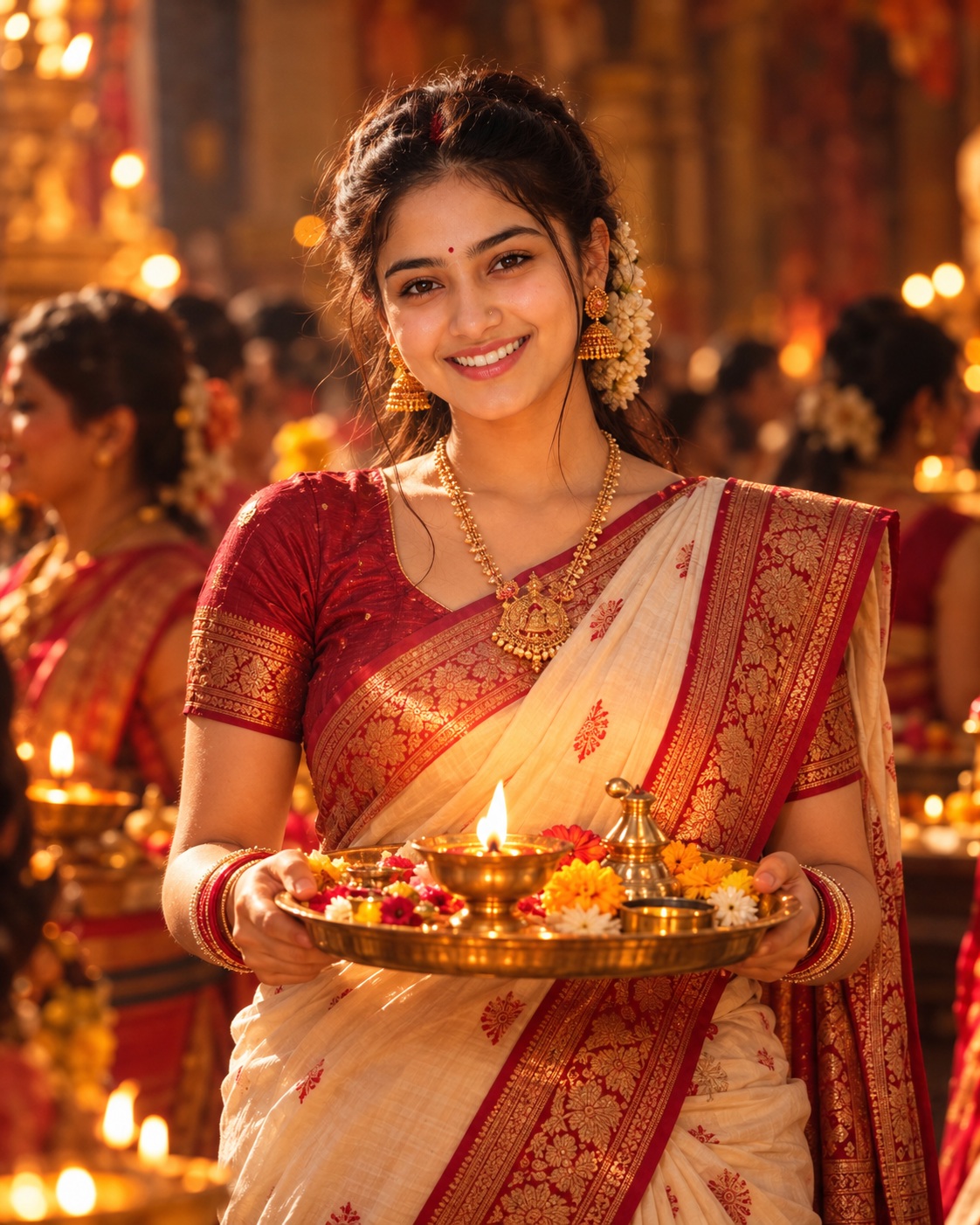
The is a warm, intimate traditional portrait centered around a woman holding a large puja thali illuminated by a bright diya flame. The composition is designed to feel like a genuine moment during an indoor devotional gathering, with warm firelight touching the hands, saree, jewelry, and lower portion of the face while the surrounding environment remains dark and atmospheric. The overall impression is peaceful, nostalgic, culturally rich, and softly cinematic without losing its photographic character.
The main subject occupies the central foreground of the composition and is presented from approximately the waist or chest upward. This medium portrait framing provides enough space to appreciate the woman’s expression, clothing, jewelry, hands, and puja thali while keeping the background gathering visible as a supporting layer. The is therefore not simply a face-focused portrait; it is a visual story built around a person participating in a devotional moment.
The pose is calm and naturally composed. Both hands hold the large puja thali, with the elbows relaxed and the shoulders positioned naturally. The torso maintains the reference orientation while the face turns slightly toward the camera. This creates a quiet connection between the subject and viewer without disrupting the devotional action. The hands and plate are particularly important because they establish what the woman is doing within the scene.
The facial expression is subtle and peaceful. Rather than a dramatic smile or intense expression, the woman carries a gentle devotional presence with a slight smile. The face should feel relaxed and emotionally connected to the warm environment. This restrained expression gives the a nostalgic quality and allows the firelight to become an important part of the emotional storytelling.
The supplied identity contributes the woman’s unique facial characteristics, while the reference establishes the head position, gaze, expression, body arrangement, and interaction with the thali. This distinction keeps the portrait faithful to the established composition. The face should look naturally integrated into the warm lighting rather than appearing separately illuminated or digitally emphasized.
The saree is a major visual feature. The woman wears a cream or ivory saree with a rich maroon or brown blouse and an ornate metallic woven border. The fabric has traditional texture and visual depth. The cream material catches the warm diya illumination, while the darker blouse provides contrast around the upper torso. The metallic border adds fine detail and connects naturally with the gold jewelry.
The saree should retain its original draping and fabric condition. The folds, border, texture, and color relationships contribute to the cultural identity of the Devotional Diya Portrait. The garment should feel authentic and tactile rather than simplified or modernized. The warm firelight can reveal subtle variations in the fabric, giving the saree dimensionality without requiring bright exposure.
Traditional jewelry provides another layer of cultural detail. Jhumka earrings, a nose pin, bindi, statement necklace, and bangles create a refined traditional appearance. These accessories should remain proportionate and naturally integrated. Their metallic surfaces can catch small warm reflections from the diya, creating delicate highlights that complement the firelit environment.
The hair is dark, naturally voluminous, and softly swept back. Loose texture remains visible rather than being tightly controlled. This gives the portrait an organic quality and prevents the hairstyle from looking overly polished. The hair also creates a dark visual frame around the face, increasing the contrast between the woman’s features and the warm illumination.
The puja thali is one of the most important visual objects in the entire concept. It is held securely with both hands and contains a bright diya flame along with traditional offerings. Its size, position, angle, contents, and relationship to the hands are central to the composition. The Devotional Diya Portrait depends on this interaction because the thali is both a ritual object and a major source of visual light.
The diya flame creates the signature illumination. Rather than using a bright frontal light source, the scene is primarily shaped by warm firelight. The flame naturally illuminates the hands, lower face, saree, and thali while allowing the surrounding environment to remain much darker. This creates a believable low-light atmosphere with a strong sense of intimacy.
The firelight also produces gentle tonal transitions. Warm highlights appear close to the flame, while areas farther away gradually become darker. This creates depth and allows the viewer’s attention to move naturally from the glowing diya toward the hands, saree, and face. The Devotional Diya Portrait gains much of its emotional quality from this gradual relationship between light and darkness.
The background represents an indoor festive or devotional gathering. Multiple people are visible but remain softly blurred. Their presence establishes context without competing with the foreground woman. The background bokeh creates a sense of community while preserving the intimate nature of the portrait.
Soft background separation is especially important because the scene contains multiple people. The Devotional Diya Portrait should allow distant figures to remain atmospheric rather than sharply defined. This makes the central subject easier to appreciate and gives the image a natural photographic depth of field.
The dominant palette consists of amber, warm brown, cream, maroon, and golden tones. These colors reinforce the devotional atmosphere. The ivory saree provides a lighter focal surface, the maroon blouse adds depth, gold jewelry supplies warm reflective detail, and amber firelight connects all the elements together.
The requested color treatment increases saturation and vibrance while retaining the dark warm atmosphere. The Devotional Diya Portrait should become richer and more luminous, but the shadows should remain deep. Cream fabric can become warmer and more dimensional, maroon tones can become deeper, gold jewelry can gain radiant richness, and amber firelight can appear more vibrant.
The enhancement should remain natural. The Devotional Diya Portrait should not become neon, excessively orange, plastic, or artificially HDR. Skin tones should remain believable, while the surrounding colors become more expressive. The goal is a refined photographic color grade that enhances the existing warmth rather than replacing it.
The contrast between light and darkness is central to the visual character. The surrounding environment should not be lifted into a bright room. Deep shadows create the atmosphere that makes the diya flame meaningful. The Devotional Diya Portrait therefore relies on darkness as an active compositional element rather than treating it as something that needs to be corrected.
The hands are especially significant because they connect the human subject with the ritual object. They should remain naturally proportioned, correctly positioned, and believable. The interaction between the fingers and the edge of the thali should feel physically natural. This detail helps the Devotional Diya Portrait maintain photographic credibility.
Natural body proportions are also important. The subject should appear like a naturally tall adult with a realistic head-to-body relationship, appropriate shoulder width, believable torso proportions, natural arms and hands, and correctly formed fingers. The body should not look compressed, squat, bulky, widened, or artificially elongated to fit the frame.
The composition should remain faithful to the reference. The camera angle, crop, scale, visibility, background placement, thali position, hand placement, and relationship between subject and environment all contribute to the visual identity. The Devotional Diya Portrait becomes effective because these elements operate together rather than independently.
The mood is intimate and devotional. There is a quiet sense of nostalgia in the firelight, traditional clothing, soft background, and subdued expression. The scene can suggest a personal festival memory or a peaceful ritual moment. It does not need theatrical drama because the diya and surrounding darkness already provide emotional depth.
The photographic texture contributes to the atmosphere. Warm grain gives the image a tactile quality, while soft bokeh creates separation in the background. These elements make the Devotional Diya Portrait feel like a captured moment rather than an overly clean digital composition.
The color enhancement can increase the visibility of subtle details. The woven saree border can become more distinct, gold jewelry can catch warmer reflections, the maroon blouse can gain depth, and the diya flame can appear more radiant. However, these improvements should remain connected to the original lighting rather than appearing as separate effects.
The background crowd also benefits from the warm color treatment. Blurred figures can retain soft amber and brown tones without becoming distracting. The atmosphere should feel populated but intimate. The Devotional Diya Portrait uses the crowd as environmental context while keeping the foreground woman clearly dominant.
The overall composition is useful for traditional festival photography, devotional portraits, cultural social media content, festive greetings, personal celebration imagery, traditional fashion presentations, and warm cinematic portrait collections. The medium framing makes the image adaptable to vertical publishing while preserving the important ritual elements.
The Devotional Diya Portrait is especially effective because the visual narrative is immediately understandable. The viewer sees a traditionally dressed woman holding a glowing puja thali, surrounded by a softly blurred gathering and illuminated by the flame. Clothing, gesture, object, light, and atmosphere all reinforce the same story.
The portrait also benefits from restraint. There is no need for modern props, bright studio equipment, artificial backgrounds, or excessive decorative elements. The saree, jewelry, thali, diya, offerings, crowd, firelight, and natural expression provide sufficient visual information. Preserving these elements keeps the concept culturally grounded.
The warm firelight creates a distinctive emotional connection. Because the flame is close to the hands and lower face, the light feels intimate and personal. The darker surroundings make the illuminated areas feel precious and focused. This creates the nostalgic quality that distinguishes the Devotional Diya Portrait from a standard brightly lit festival portrait.
The final visual impression should be warm, traditional, devotional, cinematic, and realistic. The Devotional Diya Portrait should retain deep shadows and soft background bokeh while adding richer color depth. The ivory saree should remain luminous without becoming white-hot, the maroon blouse should remain deep and warm, and the gold details should have a refined glow.
Overall, the Devotional Diya Portrait is a carefully balanced traditional portrait concept where personal identity, authentic clothing, ritual interaction, firelight, background atmosphere, and controlled color enhancement work together. Its strength comes from preserving the dark warm environment while allowing the diya and surrounding details to appear richer and more luminous.
[[[
REFERENCE ANALYSIS
- Composition: Vertical warm-toned portrait, medium shot from approximately waist/chest upward.
- Pose: Subject seated/standing naturally while holding a large puja thali with both hands; elbows relaxed, shoulders natural, face looking slightly toward camera.
- Expression: Calm, subtle smile, peaceful devotional expression.
- Outfit: Cream/ivory saree with a rich maroon/brown blouse and ornate metallic woven border.
- Accessories: Traditional jhumka earrings, nose pin, bindi, statement necklace, bangles.
- Hair: Dark, naturally voluminous hair, softly swept back with loose texture.
- Prop: Large metal puja thali containing a bright diya flame and offerings; must remain exactly positioned.
- Background: Indoor festive/devotional gathering with multiple softly blurred people.
- Lighting: Strong warm diya/firelight illuminating the hands, saree and lower face, with deep surrounding shadows.
- Color: Dominant amber, warm brown, cream, maroon and golden tones.
- Vibe: Intimate, traditional, devotional, nostalgic and cinematic.
- Finish: Rich warm photographic grain, soft background bokeh and natural firelight. Saturation/vibrance should be enhanced carefully without losing the dark warm atmosphere.
MASTER PROMPT
Use supplied ref image as master blueprint. Replace only the reference character’s face with the supplied user identity. COMPLETELY IGNORE the user’s original photo pose and body; force the user into the exact reference character’s body position, hand placement, arm position, shoulder posture, head angle and gaze. Maintain exact scale, proportion, crop, framing and visibility.
Preserve 1000% of all visual information from the reference: exact composition, camera angle, crop, background crowd, blurred people, depth of field, warm firelight, shadows, black levels, atmospheric grain, bokeh, color grading, contrast, saree draping, jewelry, hairstyle, puja thali, diya flame, offerings and every visible environmental detail.
Preserve the exact cream/ivory saree, rich maroon/brown blouse, ornate metallic woven border, exact draping, fabric texture and condition. Preserve the exact traditional earrings, nose pin, bindi, necklace and bangles. Do not redesign, modernize, simplify or change any clothing or accessories.
CRITICAL PROP LOCK: Preserve the exact puja thali in both hands, including its size, position, angle, contents, offerings and bright diya flame. Do not remove, replace, enlarge or reposition the thali or flame. Preserve the exact interaction between the hands and the plate.
CRITICAL POSE LOCK: Match the reference exactly — both hands holding the thali, same arm placement, elbow position, shoulder angle, torso orientation, head angle and gaze. COMPLETELY IGNORE the user’s original pose and body posture.
CRITICAL NATURAL BODY PROPORTION LOCK: User must appear naturally tall and realistically proportioned. Never make the user short, compressed, squat, bulky or widened. Maintain a natural adult head-to-body ratio, realistic shoulder width, torso proportions, arms, hands and fingers. No oversized head, tiny hands or distorted limbs.
CRITICAL FIRELIGHT LOCK: Preserve the exact warm diya illumination. The flame should naturally illuminate the hands, lower face, saree and thali while the surrounding environment remains dark and warm. Do not replace this with studio lighting, daylight or bright frontal illumination.
COLOR & VIBRANCE: Increase saturation and vibrance to give the image a rich, warm, luminous festive glow. Enhance the cream saree, maroon blouse, gold jewelry and amber diya light with deeper color richness and subtle radiant highlights. Keep skin tones natural and preserve the deep warm shadows. Add refined color depth without making the image neon, oversaturated, orange, plastic or artificially HDR. The final image should feel richly colored, warm and glowing while still retaining the original low-light devotional atmosphere.
Render the user’s facial identity naturally within the exact reference lighting and perspective. Preserve unique facial traits without beautification, excessive smoothing or facial reshaping.
OUTPUT MUST LOOK IDENTICAL TO THE REFERENCE EXCEPT FOR THE USER’S FACE AND THE EXPLICITLY REQUESTED SATURATION/VIBRANCE ENHANCEMENT.
EDITABLE VARIABLES
- [USER IDENTITY]: User’s face and unique facial traits only.
- [POSE]: Exact reference pose and hand placement.
- [OUTFIT]: Exact cream saree + maroon/brown blouse + traditional jewelry.
- [PROP]: Exact puja thali, diya flame and offerings.
- [LIGHTING]: Exact warm diya/firelight.
- [BODY/HEIGHT]: Natural tall appearance and realistic adult proportions.
- [COLOR]: Increased saturation + vibrance + rich warm color depth + subtle luminous glow.
- [TEXT]: None unless explicitly specified.
NEGATIVE PROMPT
“identity loss, different face, original character, user’s original pose, user’s original body posture, changed hand placement, changed thali position, missing thali, different plate, missing diya, missing offerings, altered flame, oversized flame, changed saree, different saree, different blouse, changed jewelry, missing bangles, missing necklace, altered hairstyle, redesigned background, sharp background people, removed crowd, added people, daylight lighting, studio lighting, bright frontal lighting, lifted shadows, lost firelight, flat lighting, cool grading, blue tones, dull colors, low saturation, low vibrance, washed-out colors, neon colors,
excessive saturation, excessive HDR, artificial orange skin, plastic skin, beauty filter, excessive smoothing, short body, squat body, compressed body, bulky body, widened body, oversized head, tiny hands, disproportionate limbs, deformed fingers, altered anatomy, artificial body elongation, changed crop, zoomed, recentered, different camera angle, different composition, lost grain, lost bokeh, lost atmosphere, different mood, modernized outfit, simplified fabric, generic aesthetic, polished studio portrait, changed devotional atmosphere” ]]]