
Gandhi Jayanti Girl Poster
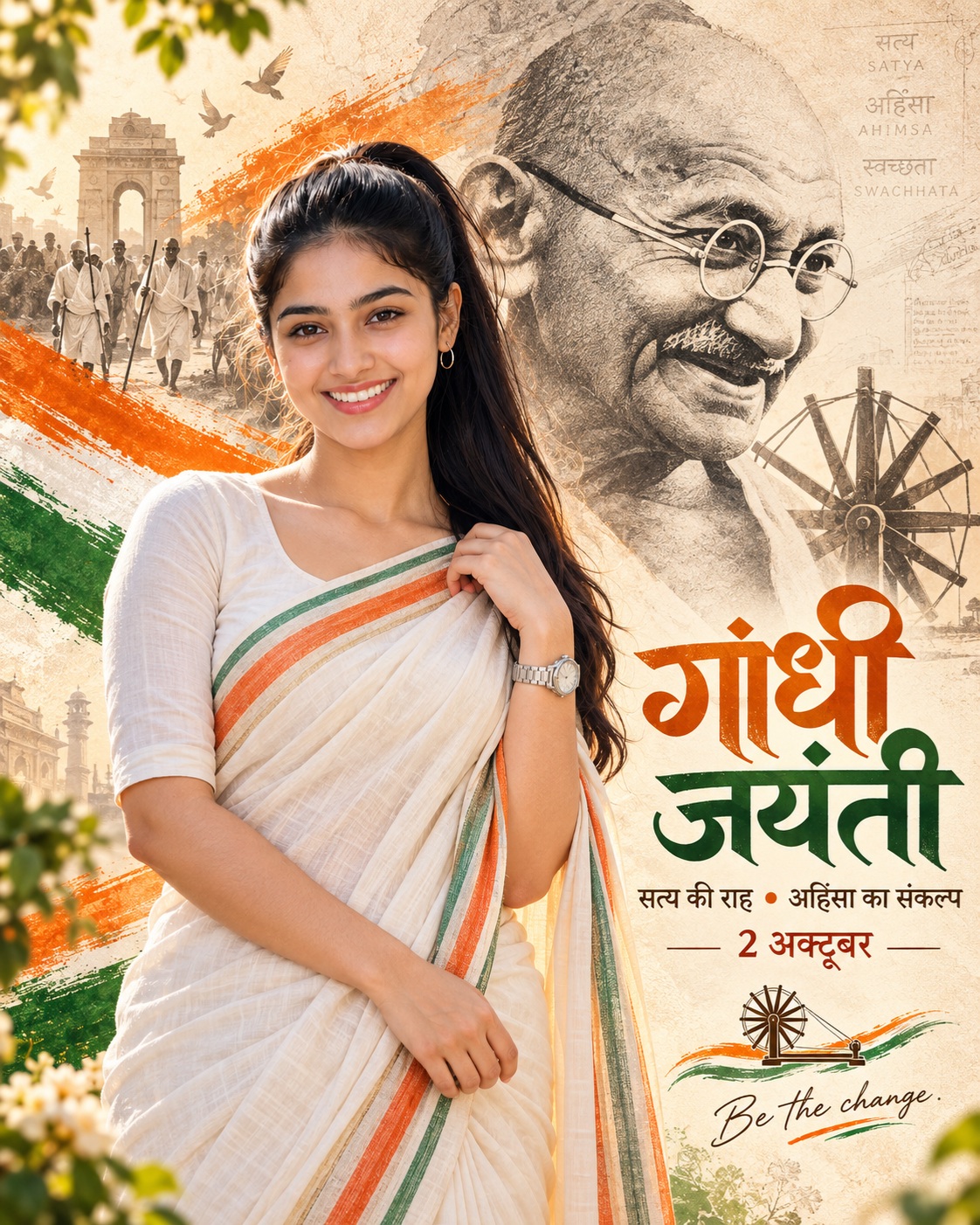
The Gandhi Jayanti Girl Poster presents a completely different visual direction from a conventional historical tribute. Instead of making the historical figure the dominant foreground subject, the concept places a young Indian woman at the center of the composition and uses Mahatma Gandhi as a subtle archival presence in the background. This creates a modern editorial interpretation of Gandhi Jayanti while keeping the commemorative character visible through historical imagery, khadi references, the charkha, and restrained Indian tricolor accents.
The main subject is a young Indian woman whose identity remains the primary personal element of the design. If a user identity is supplied, her recognizable facial structure, facial proportions, natural skin texture, hairstyle characteristics, and individual appearance should remain clear. The concept is not based on replacing her identity with a generic model. Instead, the woman remains visually personal and recognizable while being integrated into a carefully designed commemorative poster.
Her styling is intentionally elegant and traditional without becoming overly elaborate. She wears a simple white or off-white khadi saree featuring a subtle tricolor border. The light fabric creates a strong visual relationship with the ivory paper background while the saffron and green details introduce a controlled connection to the Indian national color palette. The saree should appear graceful and naturally arranged rather than heavily decorated.
The pose is an elegant three-quarter standing position. Her body is slightly turned rather than perfectly frontal, creating a refined editorial silhouette. One hand gently holds the saree pallu near the shoulder, while the other hand remains naturally relaxed. This gives the composition a calm, poised quality without creating a theatrical or exaggerated gesture.
Her expression is another important part of the visual concept. The intended expression is calm, confident, warm, and dignified, with a soft natural smile. The face should not appear heavily retouched or dramatically styled. Natural skin texture and believable facial proportions help maintain the sophisticated contemporary character of the poster.
The foreground woman is deliberately the primary visual subject. Her position, scale, and facial visibility should receive more attention than the historical elements behind her. This hierarchy ensures that the artwork feels like a modern female editorial portrait with Gandhi Jayanti symbolism rather than a traditional historical portrait with a person added afterward.
Behind the woman is a large monochrome artistic representation of Mahatma Gandhi. The treatment is intentionally subtle and archival. Rather than appearing as a bright modern photograph, Gandhi can resemble an old newspaper illustration, charcoal portrait, faded ink drawing, or historical print. This creates visual depth and establishes a connection with the commemorative theme without overpowering the woman.
The Gandhi portrait is integrated into the background rather than presented as an isolated object. Its faded tonal quality allows portions of the ivory paper texture to remain visible through or around the image. This produces an archival impression and helps the historical figure feel naturally embedded within the printed composition.
The charkha serves as another important historical and cultural symbol. It can appear beside or behind the Gandhi portrait, integrated into the background artwork. A smaller line-art charkha emblem can also appear toward the bottom of the composition. These two uses create a visual connection between the historical imagery and the modern editorial layout.
The background is based on textured ivory paper. Instead of a flat digital white surface, the paper contains subtle fibers, grain, weathered marks, ink textures, and faint watercolor bleeding. These imperfections create a handmade print quality and help the poster feel tactile and premium.
Saffron, white, and green brush strokes move diagonally through the background. These tricolor elements are artistic rather than literal. They can resemble hand-painted strokes, watercolor washes, fabric ribbons, or soft pigment marks. Their purpose is to establish Indian visual identity while maintaining the restrained editorial character.
The tricolor treatment is intentionally controlled. The artwork does not depend on excessive flags, oversized national symbols, or highly saturated patriotic decoration. Instead, saffron and green appear selectively around the woman and historical background. The ivory paper and neutral tones remain dominant, creating a sophisticated color balance.
The lighting is soft and warm. Gentle illumination falls across the woman’s face, preserving natural skin tones and subtle facial detail. A restrained rim light can outline portions of her hair and shoulders, helping separate her from the archival background without introducing dramatic effects.
The lighting also contributes to the premium print aesthetic. Shadows remain controlled and natural rather than harsh. The woman should feel softly illuminated against the textured paper, while the Gandhi portrait remains slightly faded and atmospheric. This creates a clear separation between contemporary foreground identity and historical background symbolism.
Typography is a central part of the poster. The main Hindi title reads “गांधी जयंती,” establishing the commemorative theme prominently. Beneath it, the phrase “सत्य की राह • अहिंसा का संकल्प” provides a meaningful supporting statement. The date “2 अक्टूबर” appears in a smaller but clearly readable position.
The Devanagari typography should be refined and elegant. The main title receives the strongest visual emphasis, while the supporting phrase and date remain smaller and balanced. The lettering can have a handcrafted quality while maintaining excellent readability and clean spacing.
The small English phrase “Be the change.” adds a contemporary editorial touch. Its handwritten appearance creates a contrast with the formal Devanagari typography. This detail helps bridge the historical theme and the modern visual direction without making the composition feel disconnected.
The overall layout is clean and spacious. The woman remains clearly separated from the typography and historical background, while enough negative space allows the paper texture and tricolor strokes to remain visible. The design should never feel overcrowded with symbols, text, or decorative objects.
The aesthetic combines modern Indian editorial portraiture with vintage archival artwork. The contemporary element comes from the polished female portrait, refined typography, three-quarter pose, and clean graphic layout. The historical character comes from Gandhi’s monochrome portrait, charkha symbolism, khadi texture, paper grain, and faded newspaper-inspired treatment.
The concept is intentionally different from a conventional Gandhi Jayanti poster. The historical figure is secondary, while the woman becomes the central visual personality. This gives the design a more contemporary and personalized character while preserving the commemorative context through carefully selected cultural symbols.
The khadi saree is especially important because it connects the foreground subject with the historical visual language without requiring a literal historical costume. Its simple white or cream appearance keeps the design elegant, while the subtle tricolor border provides a restrained patriotic accent.
The woman’s hairstyle should retain her individual characteristics while remaining compatible with the editorial composition. The concept does not require an exaggerated beauty transformation. Natural hair texture, realistic proportions, and recognizable facial details support the premium appearance.
The background Gandhi illustration should remain respectful and historically recognizable. Its faded archival treatment prevents it from competing with the foreground subject. The charkha similarly remains a meaningful symbol rather than becoming an oversized decorative object.
The poster’s atmosphere is peaceful, inspirational, sophisticated, and timeless. It avoids aggressive visual energy, excessive patriotic graphics, or campaign-like styling. Its emotional character comes from dignity, cultural identity, historical association, and contemporary elegance.
The composition can work particularly well for Gandhi Jayanti social posts, school and college event graphics, cultural programs, community announcements, personal commemorative artwork, educational designs, and premium vertical poster presentations. The strong female foreground also makes the concept suitable for personalized celebration artwork.
The design benefits from its contrast between modern and archival elements. The woman is rendered with natural contemporary portrait detail, while Gandhi and the charkha are treated with faded ink and historical textures. This difference establishes visual depth and makes the poster feel layered.
The ivory background acts as the bridge between these two worlds. Its handmade texture can support both the modern portrait and the historical illustration. Saffron and green brushwork then connects the composition with Indian visual identity.
The typography reinforces the same balance. The formal Hindi title establishes the cultural occasion, the supporting phrase adds a reflective message, the date communicates the event clearly, and the handwritten English phrase introduces a subtle contemporary note.
The composition is therefore designed around hierarchy. First, the viewer notices the woman. Then the eye moves toward the Gandhi portrait and charkha symbolism. Typography communicates the event, while the paper texture, tricolor strokes, and archival details provide supporting atmosphere.
The visual concept is particularly useful for anyone wanting a Gandhi Jayanti poster that feels modern without losing cultural meaning. The woman remains the emotional and visual center, while the historical elements provide context. This creates a personal commemorative design rather than a generic festival graphic.
The final character of the artwork should feel refined, warm, respectful, and editorial. The combination of white khadi, subtle tricolor accents, textured ivory paper, faded Gandhi artwork, charkha symbolism, soft lighting, and elegant Hindi typography creates a premium printed-poster atmosphere.
The defining elements are the young female foreground subject, recognizable identity, three-quarter standing pose, white or off-white khadi saree, subtle tricolor border, soft natural smile, monochrome Gandhi archival portrait, charkha, ivory handmade paper, diagonal saffron and green brushwork, refined Devanagari typography, and contemporary handwritten phrase.
Together, these details create a distinctive Gandhi Jayanti visual language. The concept avoids a conventional historical-poster structure and instead builds a modern Indian editorial composition where personal identity and cultural symbolism coexist naturally.
[[[
REFERENCE ANALYSIS
Is baar girls ke liye completely different concept: traditional Gandhi Jayanti portrait ke instead modern editorial + artistic Independence-era aesthetic. Girl foreground mein rahegi, aur Gandhi ji ka presence subtle silhouette/illustration ke form mein background mein hoga.
MASTER PROMPT
Create a premium vertical Gandhi Jayanti poster featuring a young Indian woman, with a sophisticated modern editorial-art aesthetic.
Use [USER IDENTITY] as the female subject. Preserve her exact recognizable facial identity, facial proportions, natural skin texture, hairstyle characteristics, and individuality.
Show her in a simple elegant white/off-white khadi saree with a subtle tricolor border, standing in a graceful three-quarter pose. One hand gently holds the saree pallu near the shoulder while the other remains naturally relaxed. Her expression should be calm, confident, warm, and dignified, with a soft natural smile.
Behind her, create a large monochrome artistic silhouette/ink portrait of Mahatma Gandhi, slightly faded into the background like an archival newspaper illustration. Add a subtle charkha beside or behind the portrait, integrated naturally into the composition.
Use a textured ivory paper background with hand-painted brush strokes in saffron, white, and green flowing diagonally behind the woman. Add subtle paper fibers, ink textures, faint vintage newspaper patterns, delicate grain, and soft watercolor bleeding.
Create a sophisticated lighting setup: soft warm light on the woman’s face, gentle rim light around her hair and shoulders, restrained shadows, and natural skin tones. Keep the tricolor elements graphic and artistic rather than overly saturated.
Add elegant Hindi typography:
“गांधी जयंती”
Below it:
“सत्य की राह • अहिंसा का संकल्प”
and a smaller date:
“2 अक्टूबर”
Typography should be refined Devanagari lettering, with the main title large and elegant, while the supporting text remains minimal and balanced.
Add a small tasteful charkha line-art emblem near the bottom and a subtle handwritten-style phrase:
“Be the change.”
Overall aesthetic: modern Indian editorial poster + vintage archival art + khadi texture + contemporary female portrait, sophisticated, peaceful, inspirational, premium print quality.
The composition must remain clean and spacious, with the woman clearly being the primary visual subject and Gandhi ji/charkha serving as secondary historical symbolism.
EDITABLE VARIABLES
- [USER IDENTITY]: Supplied girl’s identity.
- [OUTFIT]: White/off-white khadi saree with subtle tricolor border.
- [TEXT]: “गांधी जयंती — सत्य की राह • अहिंसा का संकल्प — 2 अक्टूबर”
- [OBJECT CHANGE]: Charkha + archival Gandhi portrait.
- [POSE CHANGE]: Elegant three-quarter standing pose.
- [ADDITIONAL EDIT]: Optional school/college/company name.
NEGATIVE PROMPT
identity loss, different girl, wrong facial structure, face swap, pasted face, artificial beauty filter, plastic skin, exaggerated makeup, western outfit, glamorous fashion pose, political campaign aesthetic, party symbols, excessive flags, excessive tricolor, neon colors, cluttered background, inaccurate Gandhi depiction, distorted Gandhi portrait, disrespectful Gandhi imagery, oversized Gandhi portrait covering subject, excessive text, illegible Hindi, incorrect Devanagari, bad typography, distorted hands,
extra fingers, extra limbs, bad anatomy, unnatural pose, oversaturation, excessive HDR, harsh shadows, excessive glow, cartoon style, anime, 3D render, cheap poster design, watermark, random logo, unnecessary objects. ]]]