
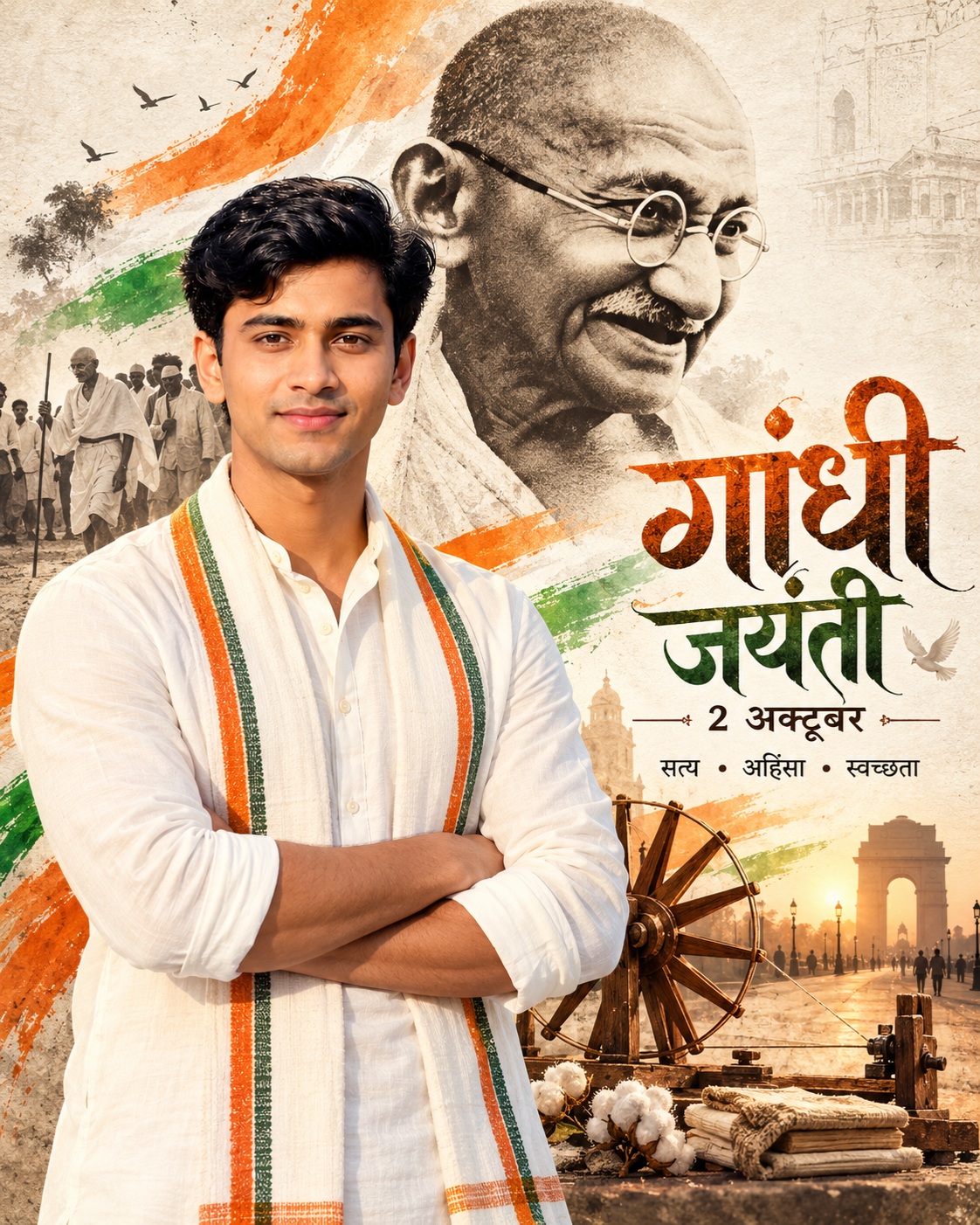
Gandhi Jayanti Poster
The Gandhi Jayanti Poster concept is designed as a premium vertical commemorative composition centered around Mahatma Gandhi and the visual language of Indian heritage. The design combines a historical portrait, a foreground identity, traditional khadi-inspired styling, the charkha, subtle tricolor elements, handmade paper textures, refined Devanagari typography, and a peaceful editorial atmosphere. The overall structure is intended to feel dignified, elegant, timeless, and suitable for a Gandhi Jayanti tribute rather than resembling a political campaign graphic.
The central historical figure is Mahatma Gandhi, presented as an artistic archival portrait rather than as a modern photographic character. His appearance is treated with an ink, charcoal, or sepia-inspired visual language that connects naturally with the handmade paper surface. This historical treatment gives the composition a documentary and commemorative quality while allowing Gandhi to remain an important visual presence without overpowering the foreground subject.
The foreground person can represent the supplied user identity. When an identity is provided, the person’s recognizable facial structure, natural features, hairstyle, proportions, and individual appearance remain important. The identity is placed naturally into the established commemorative composition rather than allowing the original identity photograph to determine the entire poster layout. The resulting presentation keeps the personal subject connected to the historical and cultural theme.
The foreground styling is based on simple traditional Indian clothing, particularly white or cream khadi-inspired garments. The clothing should feel understated and authentic rather than highly fashionable or decorative. Light fabric tones also work well with the warm handmade-paper background and allow the saffron and green accents to remain visible without overwhelming the subject.
The charkha is a major symbolic element in the composition. It provides an unmistakable connection to Gandhi’s historical legacy and the broader visual vocabulary of khadi and self-reliance. Rather than functioning as a random prop, the spinning wheel is integrated as a meaningful graphic and historical motif. Its natural wood-like appearance can contrast with the lighter paper background and help balance the foreground figure.
The color palette is deliberately restrained. White and warm beige form the foundation, while charcoal and muted brown provide historical depth. Saffron and green appear as controlled Indian tricolor accents. These colors can be introduced through brush strokes, fabric ribbons, watercolor-like washes, or subtle graphic marks rather than covering the entire composition in bright flag colors.
The restrained tricolor treatment is particularly important to the visual identity. The design does not depend on excessive patriotic decoration. Instead, small areas of saffron and green create visual emphasis against the neutral paper surface. This produces a refined commemorative atmosphere and keeps the historical portrait and foreground person visually dominant.
The background is based on textured handmade paper. Its subtle fibers, weathered surface, faint stains, and soft grain create a tactile foundation. This paper quality supports the archival character of Gandhi’s portrait and gives the entire poster the feeling of a carefully printed commemorative artwork rather than a glossy digital advertisement.
Faint Indian architectural and heritage patterns can appear within the background. These elements should remain subtle and atmospheric rather than becoming recognizable scenery. Their purpose is to provide cultural depth and visual texture while keeping the composition uncluttered.
Soft rays of light and delicate ink strokes add additional depth. They can appear behind or around the historical portrait and foreground figure without creating dramatic theatrical lighting. The light remains gentle, helping the design maintain its peaceful and reflective character.
The typography is an essential component of the poster. The main Hindi title is “गांधी जयंती,” establishing the event immediately. “2 अक्टूबर” communicates the date in a clear commemorative format. The optional phrase “सत्य • अहिंसा • स्वच्छता” provides a short thematic message connected to the intended tribute.
The Devanagari typography should feel refined and highly readable. Letterforms can have a handcrafted or traditional character while remaining clean enough for a professional poster. Balanced spacing and careful hierarchy ensure that the main title, date, and supporting message do not compete with the portraits.
The composition benefits from a clear visual hierarchy. Mahatma Gandhi’s historical portrait acts as the principal heritage reference, the foreground person provides the personal element, the charkha establishes symbolic context, and the typography communicates the occasion. Background textures and tricolor strokes remain supporting elements.
The mood is peaceful and respectful. The design avoids aggressive gestures, exaggerated patriotic effects, excessive visual noise, and contemporary campaign-style graphics. Its emotional character comes from quiet dignity, historical association, traditional materials, and carefully controlled visual details.
The foreground person’s expression should also remain calm and dignified. A relaxed standing or seated pose works with the commemorative atmosphere. The person should not appear to be performing an action-oriented or theatrical gesture. Natural posture and realistic facial anatomy help preserve the premium editorial character.
The photographic and illustrative elements are intended to coexist naturally. The foreground identity can retain realistic facial texture and proportions, while the Gandhi portrait uses a more archival ink or charcoal treatment. The difference in rendering can establish historical depth rather than appearing inconsistent.
The design also benefits from warm, subtle lighting. Natural skin tones should remain believable, while cream clothing can pick up gentle warm highlights. The background should remain lighter and softer so that the main portraits and typography remain easy to read.
The concept is particularly suited to Gandhi Jayanti commemorative artwork for schools, educational institutions, cultural organizations, community events, personal social posts, tribute graphics, and heritage-themed publications. Its clean composition makes it adaptable to both digital and print-oriented presentation.
The poster’s visual purpose is not simply to display a date. It creates a complete commemorative identity around Gandhi Jayanti through historical imagery, cultural symbolism, Indian colors, traditional fabric references, and meaningful Hindi typography. This gives the design more depth than a basic festival greeting.
The historical portrait should remain recognizable and dignified. The archival approach helps communicate that the poster is connected to a significant historical figure rather than presenting Gandhi as a contemporary character. The restrained treatment also keeps the overall design elegant.
The charkha adds a strong visual anchor to the lower or side portion of the composition. Its circular form can contrast with the vertical structure of the poster and the human figures. It also reinforces the connection between the historical portrait and khadi-inspired foreground styling.
The handmade paper texture unifies the different visual elements. The historical portrait, typography, foreground identity, tricolor strokes, and charkha can all appear to exist on the same physical surface. This creates a premium printed-poster feeling and avoids an overly digital appearance.
The tricolor accents are most effective when they remain selective. Saffron, white, and green can appear as brush strokes, subtle ribbons, or painted washes. The neutral beige and charcoal palette continues to dominate, allowing the patriotic colors to function as highlights.
The overall visual language can be described as Indian commemorative editorial design with archival portraiture and refined cultural symbolism. It combines traditional references with modern poster composition while avoiding unnecessary decorative complexity.
The foreground identity adds personalization to the historical theme. Instead of replacing Gandhi or altering the historical symbolism, the user’s identity becomes a respectful participant within the commemorative visual. This allows the artwork to feel personal while maintaining its historical focus.
The concept also provides strong benefits for social media presentation because the vertical layout naturally supports poster-style viewing. Large Hindi typography can establish the subject immediately, while the portrait and symbolic elements create visual depth beneath it.
The strongest defining details are the vertical poster format, Mahatma Gandhi archival portrait, foreground identity, white or cream khadi clothing, charkha motif, handmade paper texture, subtle Indian heritage patterns, saffron and green accents, soft lighting, refined Hindi typography, and peaceful commemorative mood. These components work together to create a cohesive Gandhi Jayanti visual.
Overall, the Gandhi Jayanti Poster concept is a polished tribute built around history, simplicity, cultural symbolism, and personal identity. Its restrained palette, tactile paper texture, archival Gandhi portrait, traditional clothing, charkha, and carefully arranged Devanagari typography create a respectful visual composition that feels appropriate for a meaningful 2 October commemoration.
[[[
REFERENCE ANALYSIS
For a Gandhi Jayanti poster, use a dignified Indian commemorative/editorial style: Mahatma Gandhi as the central historical figure, subtle tricolor accents, khadi/spinning-wheel symbolism, clean typography, and a respectful atmosphere. If you want to insert the user’s identity, the user should replace a generic foreground character while the commemorative elements remain unchanged.
MASTER PROMPT
Create a premium vertical Gandhi Jayanti commemorative poster for 2 October, designed in a dignified, elegant Indian editorial style.
Use [USER IDENTITY] as the main foreground person if an identity photo is supplied. Preserve the person’s recognizable facial structure, natural features, hairstyle, and identity, while placing them naturally into the poster composition. Maintain realistic proportions and a respectful expression.
Place a tasteful artistic portrait of Mahatma Gandhi in the background or as a subtle monochrome historical element, rendered like an archival ink/charcoal portrait. Include a delicate spinning wheel (charkha) motif and subtle khadi fabric/paper texture.
Use a sophisticated white, warm beige, muted charcoal, saffron, white, and green palette. Incorporate the Indian tricolor through restrained brush strokes, fabric ribbons, watercolor washes, or subtle graphic accents rather than overwhelming the portrait.
Background: textured handmade paper, faint Indian architectural/heritage patterns, subtle rays of light, delicate ink strokes, and minimal atmospheric grain. Keep the design uncluttered and premium.
Add elegant Hindi typography:
“गांधी जयंती”
and
“2 अक्टूबर”
Optional smaller message:
“सत्य • अहिंसा • स्वच्छता”
Typography should be refined Devanagari lettering with excellent readability, balanced spacing, and a handcrafted commemorative feel.
The overall mood should be peaceful, respectful, patriotic, inspirational, and timeless—a premium Gandhi Jayanti tribute rather than a political campaign poster. Preserve realistic facial anatomy, natural skin texture, subtle lighting, and sophisticated print-quality finishing.
EDITABLE VARIABLES
- [USER IDENTITY]: Supplied person’s identity.
- [OUTFIT]: White/cream khadi or simple traditional Indian clothing.
- [TEXT]: “गांधी जयंती — 2 अक्टूबर”
- [OBJECT CHANGE]: Charkha, subtle tricolor elements.
- [POSE CHANGE]: Calm, dignified standing or seated portrait.
- [ADDITIONAL EDIT]: Add organization/school/company name only if explicitly requested.
NEGATIVE PROMPT
distorted Gandhi portrait, inaccurate historical depiction, disrespectful pose, exaggerated patriotism, political campaign aesthetic, party symbols, flags covering face, excessive tricolor, neon colors, cluttered composition, cheap poster design, excessive text, illegible Hindi, incorrect Devanagari, distorted face, identity loss, different person, artificial face swap, plastic skin, over-retouching, cartoonish face, extra limbs, bad anatomy, oversaturation, excessive glow, dramatic action pose, modern political imagery, watermark, random logos, unnecessary objects. ]]]