
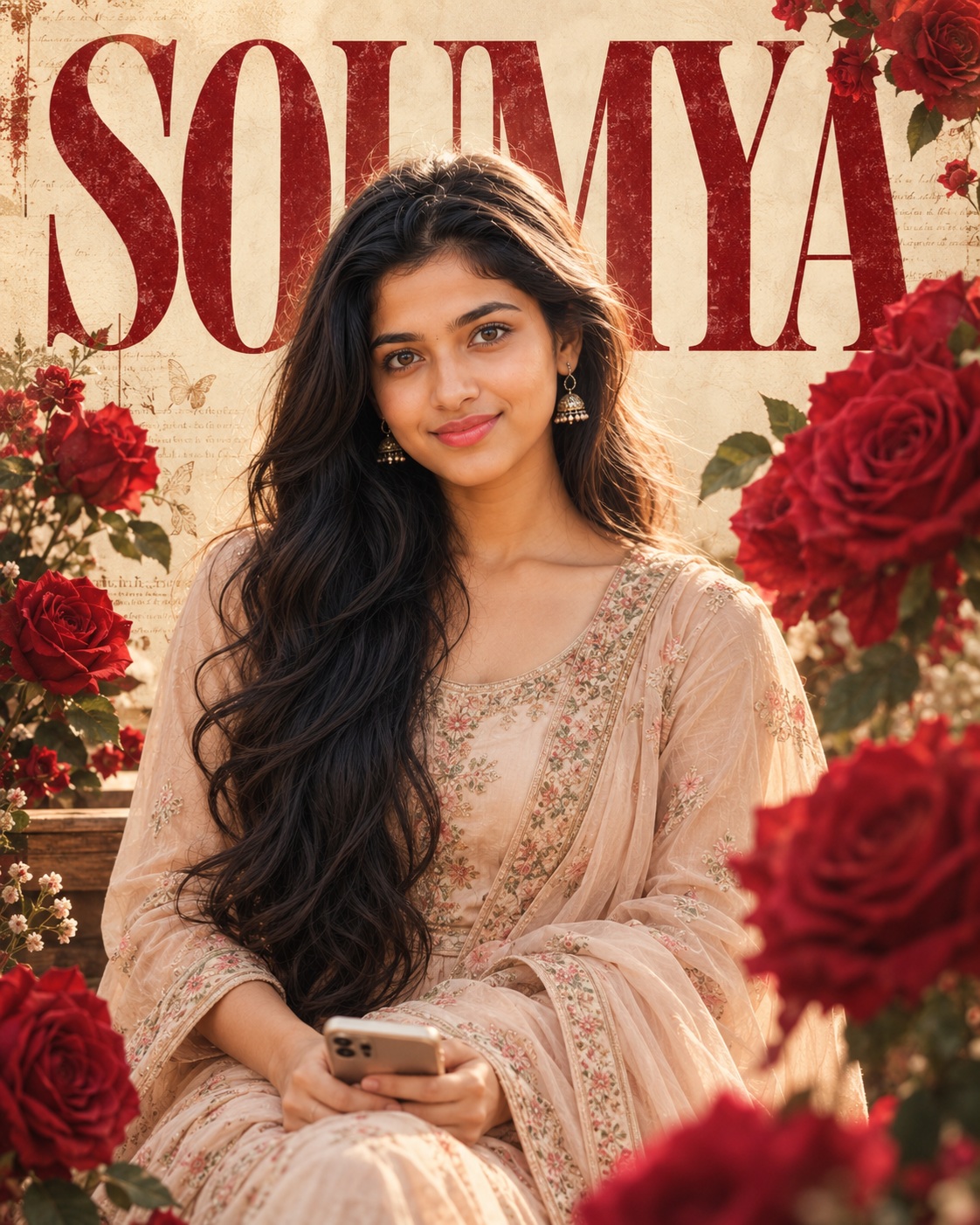
Romantic Vintage Portrait
This concept presents a single female subject through a soft, romantic, vintage editorial treatment inspired by the visual language of an elegant book cover. The composition is intimate rather than expansive, keeping the woman in the central portion of the frame and showing only a relatively small amount of her body. The close framing allows the face, expression, hair, clothing, smartphone, typography, and surrounding roses to work together as a carefully balanced portrait.
The woman is the clear focal point of the composition. She faces generally toward the camera with a gentle, natural smile and a subtle head tilt. Her expression is relaxed and approachable rather than dramatic. The slight tilt adds softness to the pose, while the direct orientation keeps the portrait personal and intimate. The central placement gives her visual importance, but the surrounding flowers and typography make the design feel more like an editorial poster than a standard portrait photograph.
The user’s identity is the key personalized element. The facial structure should remain recognizable, including the proportions of the face, eyes, eyebrows, nose, lips, jawline, cheeks, skin characteristics, and natural asymmetry. These characteristics should blend naturally into the soft photographic treatment of the reference. The goal is a coherent portrait in which the user’s identity belongs to the visual style rather than appearing as a separate face placed onto another person.
The hairstyle contributes significantly to the feminine and romantic quality of the portrait. The hair is long, dark, voluminous, and naturally wavy, with loose strands framing the face. A large portion falls over one shoulder, creating an attractive diagonal flow through the composition. The hair should retain natural movement and texture rather than appearing rigidly styled. Its volume also helps frame the face against the lighter cream background.
The pose contains a simple but meaningful everyday detail: one hand holds a smartphone near the lower center of the composition. The phone becomes part of the subject’s natural body language rather than a separate prop. Its approximate size and placement are important because moving it significantly could change the balance of the lower portion of the portrait. The other arm rests naturally, supporting the relaxed character of the pose.
The clothing is soft, feminine, and understated. The outfit uses blush, cream, and beige tones with a traditional or semi-traditional draped silhouette. Delicate embroidery or printed detailing appears around the neckline and sleeves, adding texture without overwhelming the design. The clothing should retain natural folds and a relaxed drape. Its warm neutral colors complement the cream background while allowing the deep crimson roses to provide stronger visual accents.
The background is deliberately simple but textured. It resembles warm ivory or cream editorial paper rather than a modern studio wall. Subtle paper grain, printed texture, and understated tonal variation provide the feeling of a physical book cover or vintage magazine page. The background remains quiet so the face and flowers can become the main points of attention.
Typography is integrated into this background. Large dark red serif lettering sits behind the woman and becomes partially hidden where her body overlaps it. This creates an important layered relationship between the subject and the graphic design. The typography should not appear across the woman’s face or body. Instead, portions of the letters remain visible around her silhouette, making the subject feel physically placed in front of the printed title.
The deep crimson roses are among the strongest decorative elements. Large blooms frame the right side of the composition, while additional roses appear along the left edge. Their size and placement create a botanical border around the central woman. The flowers are not merely decorative additions; they help establish the romantic mood and create a visual connection between the warm neutral background and the deep red typography.
The roses also create depth. Some blooms can feel closer to the camera while others sit farther behind the subject. Their varying sharpness and placement contribute to the photographic quality of the composition. The floral arrangement should remain controlled and consistent with the reference rather than becoming a dense garden or adding unrelated botanical elements.
Lighting is soft and warm. The woman’s face receives gentle illumination with subtle highlights and low-contrast shadows. There is no need for harsh directional lighting or dramatic studio contrast. The softer approach complements the gentle smile and vintage editorial atmosphere. Natural skin tones remain important, while the overall illumination creates a warm and flattering visual character.
The color palette is intentionally muted. Cream, ivory, blush, beige, muted brown, natural skin tones, and deep crimson form the main visual family. The restrained palette prevents the poster from feeling overly colorful or digitally saturated. The crimson roses and typography become the strongest accents against the quieter neutral foundation.
The style combines romantic portrait photography with vintage editorial and book-cover aesthetics. The photographic rendering remains soft and natural, while subtle grain and paper texture introduce a nostalgic quality. The image should not look like glossy modern fashion photography. Its appeal comes from warmth, softness, restraint, and the tactile feeling of printed editorial material.
The composition is tightly controlled. The woman remains in the central-middle area, with the head positioned around the upper-middle region and the visible body ending near the same lower crop as the reference. Additional legs, feet, or hidden body areas should not become visible. This limited crop keeps attention on the face, upper body, phone, clothing, and surrounding floral elements.
The smartphone provides a contemporary detail inside an otherwise vintage-inspired design. This contrast is subtle but useful. The overall environment feels like an old editorial book cover, while the phone introduces a personal modern element. Because the phone is held naturally, it does not disrupt the romantic aesthetic.
The typography and roses establish the poster-like quality. Without them, the concept could read as a simple portrait photograph. With them, the woman becomes part of a designed visual composition. The dark red serif lettering supplies structure, while the roses provide organic framing. Together, they create the feeling of a premium editorial cover.
The identity replacement should preserve the reference’s visual relationships. The user’s face changes the person, but the crop, pose, phone position, clothing style, hair silhouette, typography, roses, background, lighting, and palette remain connected to the original design. This keeps the finished concept faithful rather than turning it into an unrelated personal portrait.
The negative requirements reinforce this approach by excluding identity loss, generic facial features, incorrect pose, missing smartphone, altered body visibility, changed crop, redesigned typography, missing roses, extra flowers, modern western clothing, harsh lighting, excessive contrast, HDR, oversaturation, artificial skin, anime treatment, 3D rendering, glossy fashion styling, and excessive sharpening. These exclusions protect the soft editorial identity of the concept.
The mood is gentle, romantic, elegant, and intimate. The smile creates warmth, the soft head tilt adds tenderness, the long flowing hair adds femininity, and the crimson roses introduce classic romantic symbolism. The warm cream background keeps everything calm and refined, while the dark red typography gives the composition a sophisticated editorial edge.
From a practical design perspective, this concept can work well for personal portraits, social-media posts, profile artwork, romantic posters, festive graphics, fashion editorials, book-cover-inspired visuals, personal branding, invitation artwork, and lifestyle portraits. The design is especially suitable when the goal is to make a personal photograph feel curated and artistic without losing natural facial identity.
The concept also demonstrates how a small number of carefully chosen elements can create a strong visual identity. There is no need for a complex environment. The face, hair, elegant clothing, smartphone, serif typography, cream paper texture, and crimson roses provide enough information to establish the complete creative direction. Each element contributes to the same warm editorial mood.
The vintage character comes from texture and color rather than excessive aging effects. Subtle paper grain, gentle photographic softness, muted colors, and restrained contrast provide nostalgia without making the artwork look damaged or artificially old. The design should feel premium and carefully printed rather than distressed for its own sake.
The floral framing also helps guide the viewer’s attention. The large roses on the sides naturally lead the eye inward toward the woman, while the typography creates horizontal visual structure behind her. The face remains the strongest focal point, followed by the hair, expression, clothing details, and floral elements.
Overall, the creative direction is a warm romantic editorial portrait with a book-cover sensibility. A recognizable female identity sits at the center, surrounded by soft cream tones, dark red typography, elegant blush clothing, and deep crimson roses. The smartphone introduces a personal everyday detail, while the soft lighting and subtle paper texture create a nostalgic visual atmosphere. The result is intimate, feminine, graceful, and sophisticated.
[[[
REFERENCE ANALYSIS
- Composition: Vertical portrait poster, tightly framed around a seated/standing female subject in the center. The image has a warm cream/beige editorial background with large typography partially visible behind her.
- Subject scale & visibility: One woman occupies the central-middle portion of the frame, visible from head down to approximately the waist/lap area. Preserve the exact crop and relatively small amount of body visible.
- Pose: Woman faces the camera with a gentle, natural smile. Her head is slightly tilted. Long dark hair falls over one shoulder. One hand holds a smartphone near the lower center while the other arm rests naturally.
- Identity: Replace only the woman’s identity with [USER IDENTITY]. Preserve her facial structure, recognizable features, hair identity and natural asymmetry.
- Outfit: Soft blush/cream-beige traditional or semi-traditional draped outfit with a relaxed, elegant silhouette. Delicate embroidered/printed detailing around the neckline and sleeves.
- Hair: Long, voluminous dark hair with loose waves, falling naturally around the face and over the shoulder.
- Background typography: Large dark red serif lettering behind the subject, only partially visible because the woman overlaps it. Preserve its position, scale and typography treatment.
- Flowers: Large deep red/crimson roses frame both sides of the composition, with prominent blooms on the right and additional roses along the left edge.
- Background texture: Warm ivory/cream paper-like backdrop with subtle printed/editorial texture.
- Lighting: Soft, warm, diffused portrait illumination with gentle highlights and low-contrast shadows.
- Style: Romantic vintage editorial / book-cover portrait with muted warm tones, soft photographic rendering and botanical framing.
- Mood: Gentle, romantic, elegant and intimate.
MASTER PROMPT
Use the supplied reference image as the master visual blueprint. Replace only the reference character with the supplied user identity. Maintain the exact subject scale, screen-space proportion, cropping, and visibility of the reference character; do not normalize, enlarge, or reframe. Preserve all other visual information, composition, environment, lighting, color, depth, atmosphere, objects, background and artistic rendering as faithfully as possible.
Reconstruct the reference as a warm romantic vintage editorial portrait/poster in the exact vertical composition. Preserve the same camera distance, framing, subject placement and amount of body visible. Keep the single female character positioned in the central portion of the frame, with the head near the upper-middle and the visible body ending around the same lower crop. Do not reveal additional legs, feet or hidden body areas.
Replace the original woman’s identity with [USER IDENTITY]. Preserve the user’s recognizable facial structure, facial proportions, eyes, eyebrows, nose, lips, jawline, cheeks, skin characteristics and natural asymmetry. Integrate the identity naturally into the reference’s soft photographic rendering. Do not paste a realistic face onto another person’s body and do not turn the user into a generic model.
Preserve the exact relaxed pose and expression: the woman faces generally toward the camera with a gentle natural smile and a subtle head tilt. Maintain the same shoulder orientation, arm positioning and hand placement. One hand holds a smartphone near the lower center of the frame, while the other arm rests naturally. Preserve the phone’s approximate size and position.
Preserve the woman’s long, dark, naturally wavy hair, with loose strands framing the face and the majority falling over the shoulder. Adapt the user’s actual hair identity naturally while maintaining the reference’s overall silhouette and volume.
Preserve the soft blush/cream-beige traditional draped outfit, including its relaxed silhouette, neckline, sleeve treatment, delicate detailing and fabric folds. Keep the warm neutral clothing palette and understated elegant styling. Do not replace it with modern Western clothing unless explicitly requested through [OUTFIT].
Preserve the background as a warm ivory/cream editorial paper-like surface with subtle texture and understated printed detail. Keep the large dark red serif typography behind the subject in exactly the same position, scale and partially obscured relationship to the woman. The text should remain behind her rather than being placed over her face or body. Use [TEXT] only if an explicit text replacement is requested.
Preserve the prominent deep crimson/red roses framing the composition. Keep the large rose blooms along the right side and the additional floral elements along the left edge, maintaining their approximate size, placement, overlap and depth. Do not add unrelated flowers or decorative objects.
Match the reference’s soft warm lighting, gentle highlights, muted shadows and low-contrast photographic finish. Maintain natural skin tones without excessive brightness or artificial glow. Preserve the warm cream, blush, muted brown and deep crimson palette.
Maintain the reference’s romantic vintage book-cover/editorial aesthetic, with soft focus, subtle paper texture, gentle photographic grain and restrained detail. The result should feel like the same finished poster, with the original woman replaced by [USER IDENTITY], rather than a newly designed portrait.
EDITABLE VARIABLES
- [USER IDENTITY]: Supplied user’s identity; preserve recognizable facial structure, proportions and natural features.
- [OUTFIT]: Reference soft blush/cream-beige draped outfit.
- [TEXT]: Preserve the existing large dark-red serif typography; replace only if explicitly specified.
- [OBJECT CHANGE]: None; preserve smartphone.
- [POSE CHANGE]: Reference pose — gentle smile, slight head tilt, smartphone held near lower center.
- [ADDITIONAL EDIT]: None unless explicitly specified.
NEGATIVE PROMPT
identity loss, different face, generic face, original character remaining, added person, extra person, face swap, pasted face, artificial face replacement, wrong facial proportions, wrong expression, wrong head tilt, wrong gaze, wrong pose, wrong hand position, missing smartphone, oversized smartphone, altered body visibility, full body, legs revealed, feet revealed, changed crop, changed camera distance, changed framing, enlarged subject, reduced subject, recentered composition, altered screen-space proportion, redesigned background, plain background, missing typography, incorrect typography, text over face, altered serif lettering,
missing roses, extra flowers, different flowers, missing floral framing, oversized flowers, altered rose placement, wrong outfit, modern western clothing, excessive jewelry, harsh lighting, overexposed face, lifted shadows, high contrast, HDR, oversaturation, orange cinematic grading, plastic skin, excessive skin smoothing, anime, cartoon, 3D render, glossy fashion photography, excessive sharpening, lost paper texture, lost photographic softness, altered mood, unnecessary modifications. ]]]