
Antique Indian Portrait
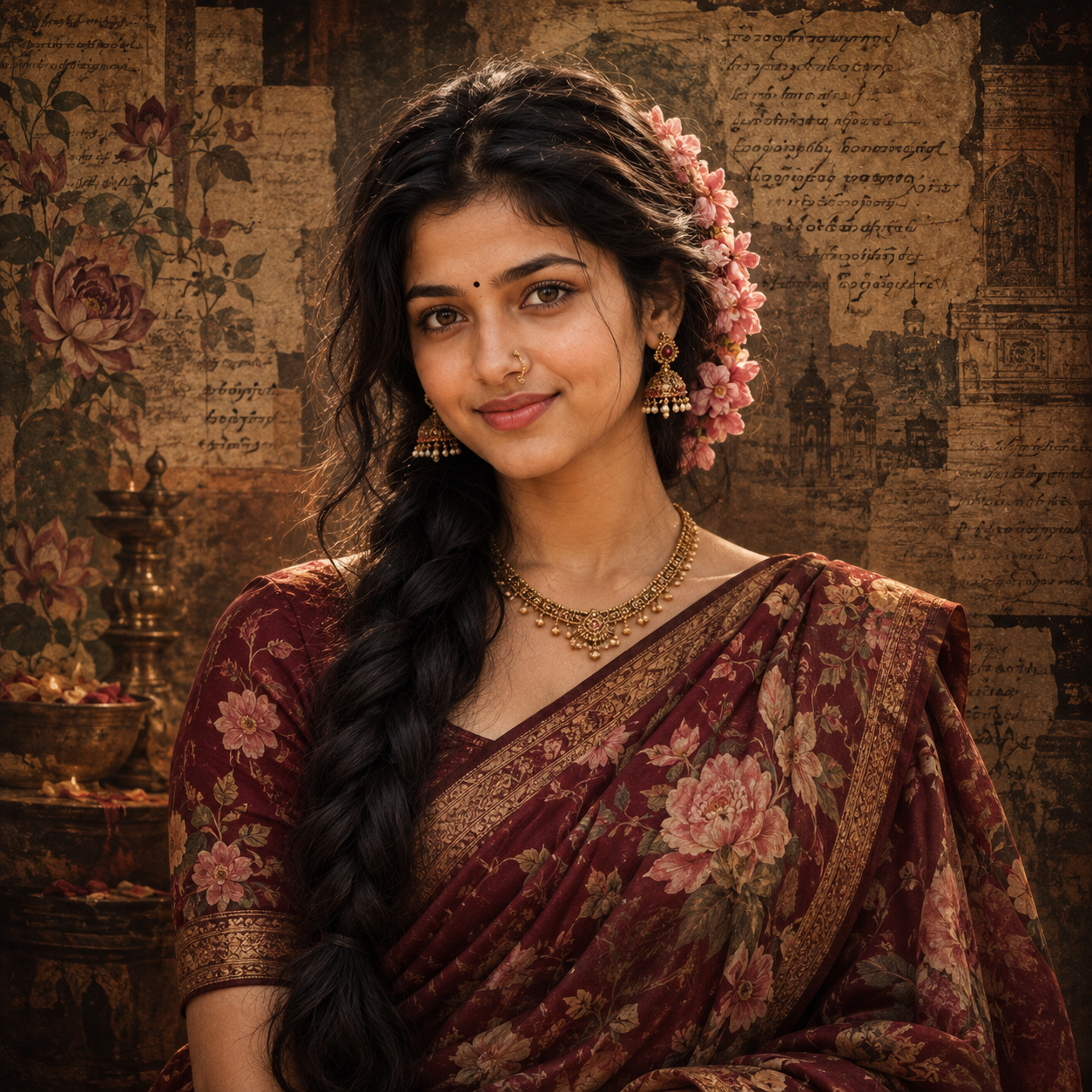
The concept presents a single Indian woman as the central subject of a wide cinematic fine-art portrait. The composition is designed in a horizontal 16:9 format with thin black letterbox bars at the top and bottom, giving the artwork the visual character of a historical film still or an elaborate classical painting presented in a cinematic frame. The woman is positioned slightly left of center, allowing the surrounding background to remain visible while keeping her face as the strongest focal point.
The subject is framed from approximately the mid-torso or chest upward. Her shoulders extend naturally toward both sides of the frame, creating a balanced bust portrait without making the composition feel tightly cropped. The head occupies a prominent area while the background remains sufficiently visible to communicate the historical and manuscript-inspired atmosphere.
Her pose is mostly forward-facing with a subtle turn toward the viewer’s right. The head has a gentle tilt, while the shoulders remain relaxed and nearly symmetrical. Her gaze is directed calmly into the camera. This direct eye contact gives the portrait an intimate quality, while the slight turn and head tilt prevent the pose from feeling completely rigid or formal.
The facial expression is composed, confident and slightly mysterious. The lips remain relaxed with a subtle natural smile rather than a broad expression. This restrained emotion supports the antique fine-art character of the concept. The woman appears poised and self-assured, but the atmosphere remains quiet and nostalgic rather than glamorous or contemporary.
The hairstyle is a major part of the cultural and visual identity. The hair is dark black and center-parted before being gathered into a traditional braid that falls over the viewer’s left shoulder. This long braid provides a strong vertical element within the horizontal composition and reinforces the traditional styling of the character.
Clusters of pink flowers are arranged around the side and back of the head. These flowers create a delicate contrast against the dark hair and add a soft feminine detail to the otherwise earthy and historical palette. Their placement also helps connect the hairstyle with the floral motifs present in the sari.
The face includes several traditional styling details. A small black bindi sits above the eyebrows and becomes an important central point within the facial composition. The eyes are dark and expressive, defined with kajal or eyeliner. This eye treatment strengthens the traditional character while maintaining the realistic painterly appearance of the portrait.
A subtle nose-ring or nath detail adds another cultural element. The lips have muted red tones rather than a bright modern cosmetic appearance. Makeup remains understated and integrated with the historical aesthetic. The face therefore feels traditionally styled without becoming a contemporary fashion portrait.
Traditional jewelry surrounds the face and neck. The earrings contain intricate gold and red detailing, while the necklace and neck ornaments provide additional decorative structure. These jewelry elements frame the portrait and help communicate the richness of the traditional Indian styling.
The sari is one of the most visually important clothing elements. It uses a rich maroon or burgundy foundation with a muted floral pattern. Pink, cream and subdued green motifs appear across the fabric, creating visual interest without introducing overly vibrant colors.
The sari is draped naturally over the shoulder, with the direction, folds and fabric behavior contributing to the realism of the portrait. The clothing is not treated as a generic Indian outfit. Its exact draping and textured painterly appearance are central to the established character design.
The floral pattern also creates a relationship between the clothing and the pink flowers in the hair. These repeated botanical details form a subtle visual connection across the composition. The result feels coordinated without appearing artificially color-matched.
Lighting is warm and painterly. The face receives the strongest illumination, with gentle highlights across the forehead, cheeks, nose and lips. The surrounding hair and sari remain comparatively darker, creating a soft hierarchy that naturally guides attention toward the face.
The shadows are atmospheric rather than harsh. They add depth around the hair, clothing and background without creating dramatic cinematic contrast. This soft treatment supports the historical fine-art mood and helps the portrait feel like a carefully painted study.
The color palette is deliberately subdued. Warm brown, sepia, muted olive, burgundy, maroon, dusty pink, cream and warm skin tones establish the visual foundation. The colors feel aged and slightly faded rather than vibrant or digitally enhanced.
The antique palette is especially important because it separates the concept from a modern fashion image. The muted colors give the portrait a sense of history and nostalgia. Even the pink flowers and sari details remain softened so they integrate naturally with the surrounding parchment-like environment.
The background is an essential part of the visual story. Instead of a simple studio wall, the portrait is surrounded by an aged manuscript and collage-inspired surface. Faded handwritten scripts, old paper fragments, parchment textures and historical-looking documentary motifs create a layered environment behind the woman.
These manuscript elements provide visual context without becoming readable modern typography. They function as atmospheric historical textures that suggest old documents, cultural memory and archival material. The background therefore supports the antique personality of the portrait without competing with the face.
The aged paper treatment also creates a tactile quality. Weathered surfaces, faded marks and layered fragments make the background feel physically old. This texture works particularly well with the visible painterly brushwork across the woman’s face, clothing and hair.
The overall artistic medium is classical digital painting combined with fine-art portraiture. The face retains realistic proportions and recognizable human detail, while brushwork remains visible across the image. Soft textured edges and painterly transitions keep the artwork from looking like a conventional photograph.
The painterly surface is especially important around the sari, hair and background. Rather than perfectly smooth digital rendering, the artwork retains subtle brush marks that communicate the feeling of a traditional painted portrait. This gives the composition an aged artistic quality.
The portrait also avoids the glossy appearance associated with modern fashion photography. There are no bright studio colors, sharp commercial highlights or contemporary styling cues. The emphasis is on traditional beauty, atmosphere, texture and historical character.
The wide cinematic framing adds another layer of sophistication. The black letterbox bars create the impression of a film frame and give the portrait a storytelling quality. The horizontal composition also allows the manuscript background to extend around the character, making the environment feel like part of a larger historical scene.
The woman’s slightly left-of-center placement is useful because it creates visual breathing room around the head and shoulders. The background can therefore remain visible without forcing the subject into the exact middle of the frame. This asymmetry gives the portrait a more natural editorial composition.
The facial identity is the primary personalization element. The user’s recognizable facial traits are intended to occupy the established character while retaining the reference’s head angle, gaze, expression and painterly treatment. This allows personal identity to coexist with the traditional visual language.
The concept specifically separates facial identity from the rest of the character design. The hairstyle, sari, jewelry, flowers, pose and background remain connected to the established artistic concept. This makes the portrait feel like a personalized interpretation of a classical character rather than a completely redesigned scene.
Natural anatomy is another important feature. The head, neck, shoulders and facial proportions remain realistic. The portrait avoids exaggerated head size, stretched neck structure or disproportionate shoulders. This realism helps the painterly style remain convincing.
The mood is elegant, traditional, nostalgic and intimate. The direct gaze creates a personal connection, while the historical background introduces mystery. The subdued expression and soft lighting keep the mood refined rather than theatrical.
The antique atmosphere can suggest cultural memory, heritage, historical storytelling and traditional portraiture. The manuscript background gives the artwork a sense of time and place without specifying a modern location. This makes the concept feel timeless.
The composition can be useful for traditional Indian portrait artwork, cultural social media graphics, heritage-themed creative projects, artistic profile images, editorial portrait collections and personalized fine-art designs. Its subdued palette also makes it suitable for audiences who prefer sophisticated traditional aesthetics.
The sari and jewelry provide cultural richness, while the restrained expression prevents the portrait from becoming overly decorative. The face remains the main subject, with clothing and accessories supporting the character rather than overpowering her.
The pink flowers add a delicate visual accent. Their presence around the hair echoes the floral motifs of the sari and introduces a soft contrast against the black hair. Because the flowers remain muted, they fit naturally into the antique palette.
The background manuscript treatment also contributes to storytelling. Faded writing and parchment fragments can evoke old letters, archival records, historical documents or forgotten artistic collections. The portrait therefore feels connected to a larger imagined history.
The combination of realistic facial rendering and visible brushwork creates a balance between recognition and artistic interpretation. The viewer can still perceive natural facial structure while appreciating the painterly surface. This makes the concept suitable for a personalized artwork rather than a generic illustration.
The warm illumination across the face creates a gentle focal hierarchy. The forehead, cheeks, nose and lips receive subtle highlights, while the darker hair and sari frame the face. This lighting arrangement helps preserve the intimate quality of the portrait.
The dark hair provides a strong visual border around the face, while the pink flowers soften that border. The braid then continues downward toward the shoulder, connecting the head area to the torso. This creates a natural vertical rhythm inside the wide frame.
The maroon sari creates a second major visual mass beneath the face. Its floral motifs introduce detail without becoming overly bright. The fabric folds and painterly texture help communicate depth and physical material.
The jewelry provides small points of visual richness around the ears and neck. Gold and red details contrast gently with the darker hair and maroon sari. These details reinforce the traditional character while remaining subordinate to the facial expression.
The antique wall and manuscript collage keep the background visually active but muted. This is important because the portrait needs environmental context without losing its identity as a character-focused artwork. The faded textures provide depth while the subdued colors keep the face dominant.
The final creative direction can therefore be understood as a cinematic classical Indian woman portrait rendered through realistic digital painting and visible fine-art brushwork. A traditional braid, pink flowers, bindi, kajal, jewelry and maroon floral sari establish the cultural identity, while the aged manuscript background and sepia palette create the historical atmosphere.
The strongest feature is the balance between tradition and fine-art presentation. The portrait does not rely on modern fashion styling. Instead, it uses cultural clothing, traditional jewelry, soft expression, antique textures and painterly rendering to create an image that feels timeless.
The artwork can appeal to viewers interested in Indian heritage, traditional portraiture, historical aesthetics, fine-art character design and nostalgic visual storytelling. The subdued colors make the concept sophisticated, while the direct gaze keeps it emotionally accessible.
The result is intimate rather than grandiose. The woman looks calmly toward the viewer, surrounded by faded documents and painterly textures. This creates the feeling of discovering a beautiful historical portrait preserved within an old artistic archive.
The visual language remains cohesive because every major element shares the same aged treatment. Skin tones, sari colors, flowers, jewelry, paper textures and background imagery are all softened by the same warm palette. This unity prevents any single component from appearing digitally pasted into the composition.
The wide frame and letterbox bars further emphasize the cinematic character. The artwork can feel like a still from an imagined historical film, while the painterly surface gives it the qualities of a museum-style portrait.
Overall, the concept describes a refined traditional female portrait with strong Indian cultural details, realistic facial character, antique manuscript atmosphere and painterly digital treatment. Its purpose is to combine personal identity with a sophisticated historical aesthetic, creating a visually rich portrait that feels warm, nostalgic, traditional and mysterious.
[[[
REFERENCE ANALYSIS
- Format: Wide cinematic portrait, approximately 16:9, with thin black letterbox bars at top and bottom.
- Composition: Single woman centered slightly left, framed from mid-torso/chest upward. Face is the dominant focal point, with shoulders extending toward both sides.
- Pose: Woman faces mostly forward with a subtle turn toward the viewer’s right. Head slightly tilted, shoulders relaxed and nearly symmetrical. Direct, calm gaze into camera.
- Expression: Soft, composed, confident and slightly mysterious. Closed relaxed lips with a subtle natural smile.
- Hair: Dark black hair, center-parted, pulled into a traditional braid over the viewer’s left shoulder. Hair is decorated with clusters of pink flowers around the side/back of the head.
- Face styling: Small black bindi centered above the eyebrows, dark expressive eyes with defined kajal/eyeliner, subtle traditional makeup, small nose ring/nath detail and natural red-toned lips.
- Jewelry: Traditional Indian earrings with intricate gold/red detailing, necklace/neck ornaments and visible decorative jewelry around the ears and neck.
- Outfit: Traditional Indian sari with a rich maroon/burgundy and muted floral pattern, draped over the shoulder. Fabric has painterly floral motifs in pink, cream and muted green tones. Preserve exact draping, colors, folds and texture.
- Lighting: Warm, soft, painterly illumination focused primarily on the face. Gentle highlights on forehead, cheeks, nose and lips, with darker atmospheric shadows around hair and clothing.
- Color palette: Warm earthy brown, sepia, muted olive/green, burgundy, maroon, dusty pink and warm skin tones. Overall subdued and antique rather than vibrant.
- Style: Highly detailed classical digital painting / fine-art portrait, with realistic facial rendering blended with visible painterly brushwork and an aged historical-art aesthetic.
- Background: A textured antique wall/collage covered with faded handwritten manuscripts, old paper fragments, historical-looking script, aged parchment textures and muted architectural/documentary motifs.
- Mood: Elegant, traditional, nostalgic, intimate and mysterious. No modern or glossy fashion aesthetic.
- Framing: Preserve exact horizontal composition, letterbox bars, subject scale, crop and background placement.
- Anatomy: Natural realistic female anatomy and facial proportions. No enlarged head, distorted neck or disproportionate shoulders.
MASTER PROMPT
Use supplied ref image as master blueprint. Replace only ref character’s face with supplied user identity. COMPLETELY IGNORE the user’s original photo pose and body; force the user into the exact body pose, head angle, shoulder placement, posture, gaze and expression of the reference character. Maintain exact scale, proportion, crop, visibility. Preserve 1000% of all visual info including darkness, grading, mood, lighting, shadows, contrast, saturation, composition, environment, objects, background, rendering, outfit (exact style/color/condition), ref pose (exact body position/hands/expression), vibe (exact emotional tone), and natural human anatomy (correct head-to-body ratio, proportional hands/limbs, no distortions). Output must look IDENTICAL to ref except face. Do NOT brighten, enhance, modify, change outfit, ref pose, or vibe.
Recreate the supplied reference as an exact classical Indian fine-art portrait. Preserve the wide cinematic 16:9 framing and the thin black letterbox bars at the top and bottom.
Preserve the exact single-character composition: one woman centered slightly left, framed from the mid-torso upward, with the same shoulder width, head scale, negative space and background visibility.
Preserve the exact reference pose: mostly front-facing three-quarter orientation, subtle head turn, slightly tilted head, relaxed shoulders, direct gaze into the camera and calm composed expression. Completely ignore the user’s original pose and body posture.
Replace ONLY the facial identity with the supplied user’s identity. Preserve the user’s unique facial traits while adapting them naturally to the reference’s exact facial angle, expression, lighting and painterly rendering. Do not import the user’s original hairstyle, clothing, jewelry or body.
Preserve the exact traditional hairstyle: center-parted black hair, gathered into the long braid falling over the viewer’s left shoulder, with clusters of pink flowers arranged around the side/back of the head. Preserve the exact hairstyle silhouette and flower placement.
Preserve all facial styling visible in the reference: small black bindi, dark kajal-defined eyes, natural traditional makeup, subtle nose-ring detail and muted red lips. Preserve the exact jewelry arrangement, including ornate traditional earrings and necklace/neck ornaments.
Preserve the exact maroon/burgundy floral sari, including its floral motifs, muted pink and cream flowers, dark folds, drape direction, shoulder placement, fabric texture and painterly condition. Never change the sari’s style, color, pattern, draping or condition.
Preserve the exact warm painterly lighting: soft facial illumination, gentle highlights on the forehead/cheeks/nose/lips and deep atmospheric shadows around the hair and sari. Do not brighten the image or flatten the shadows.
Preserve the exact earthy antique palette: warm brown, sepia, muted olive, burgundy, dusty pink, cream and natural warm skin tones. Keep the colors subdued and aged. No modern vibrant grading, no orange cinematic enhancement, no oversaturation.
Preserve the exact antique manuscript background: aged parchment/document textures, faded handwritten scripts, old paper fragments, muted historical imagery and layered weathered surfaces. Preserve the background’s depth, placement, darkness and texture. Do not replace it with a clean wall or generic studio background.
Preserve the exact classical digital-painting aesthetic, realistic facial rendering combined with visible painterly brushwork, soft textured edges, fine-art portrait treatment and historical atmosphere. Do not convert it into a modern photograph, anime, 3D render or hyper-clean digital artwork.
Maintain perfect natural anatomy: realistic head-to-body ratio, proportional facial features, natural neck and shoulders, realistic eyes, nose and mouth, no distorted anatomy.
Reference = FINAL IMAGE. The reference is the base layer; only the user’s facial identity changes. Everything else remains locked at 1000%.
EDITABLE VARIABLES
- [USER IDENTITY]: Supplied user’s facial identity and unique facial traits only.
- [OUTFIT]: Exact maroon/burgundy floral sari, same draping, floral pattern, colors, folds and condition.
- [TEXT]: Preserve background manuscript/script marks as visual texture; no new text.
- [OBJECT/POSE/ADDITIONAL]: None. Preserve exact pose, jewelry, flowers, braid, background and letterbox framing.
NEGATIVE PROMPT
“identity loss, different face, original character identity, added person, removed person, user’s original pose, user’s original body, wrong head angle, wrong head tilt, wrong gaze, wrong expression, different shoulder position, altered posture, smiling differently, exaggerated emotion, different hairstyle, loose hair, short hair, missing braid, different braid placement, missing pink flowers, different flowers, missing bindi, missing kajal, missing nose ring, missing traditional jewelry, different earrings, different necklace, changed sari,
different outfit, different sari color, different floral pattern, altered sari draping, modern clothing, clean modern background, redesigned background, missing manuscripts, missing parchment texture, missing historical script, new objects, removed objects, altered lighting, brighter face, lifted shadows, oversaturation, vibrant colors, orange grading, modern cinematic grading, excessive contrast, cool blue grading, photorealistic studio portrait, fashion photography, anime, cartoon, 3D render, vector art, watercolor,
plastic skin, hyper-clean digital art, generic Indian portrait, beautification, modernization, changed painterly style, lost brushwork, lost antique texture, changed mood, changed vibe, altered composition, zoomed, cropped, recentered, enlarged, reduced negative space, altered letterbox bars, changed scale, distorted anatomy, big head, small head, disproportionate shoulders, distorted neck, malformed facial features, unnatural eyes, reconstructed hidden areas, user’s original hairstyle, user’s original clothing, user’s original body posture” ]]]